Communicating through Newspaper re-posts.

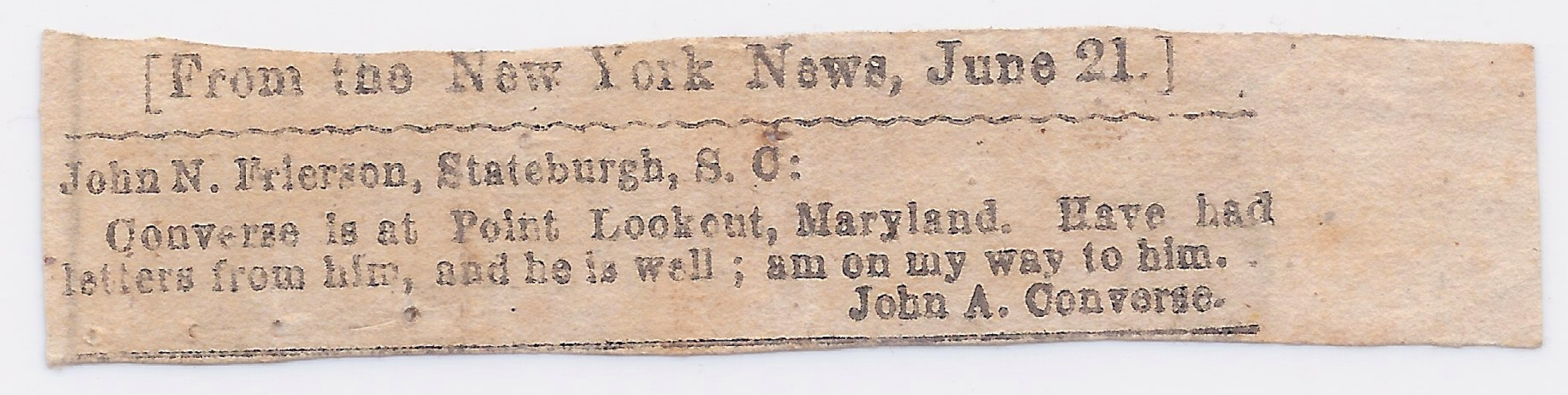
This post tells a story of how two families communicated during the Civil War when one was in the North and one was in the South.  This method of communication used the newspapers of each region to repost personal messages.  John Adams Converse (1803 – 1886), residing in Montreal, Canada in 1864, was a younger brother of the Rev. Augustus Lawrence Converse (1798 – 1860), who, as we know from previous posts in this blog, was the rector of Holy Cross Church in Stateburg, S.C., for many years.  Rev. Converse’s only daughter Katherine married John Napolean Frierson, and so the Reverend was also the maternal grandfather of his namesake, Charleston Light Dragoon A. Converse Frierson.  In May of 1864, when Converse was wounded, captured and sent to Point Lookout, Maryland, his Stateburg family must have certainly been worried about his health and safety.  John A. Converse was apparently the family’s contact in the North who was leading the search for the young Frierson.  The clipping below, apparently a re-post from the New York News from June 21, 1864, shows that John A. Converse has been contacted by his grand-nephew and told of his imprisonment at Point Lookout.  John Converse tells the family that he is on his way to see young Converse Frierson (click on the images to enlarge).prisoner_converse3

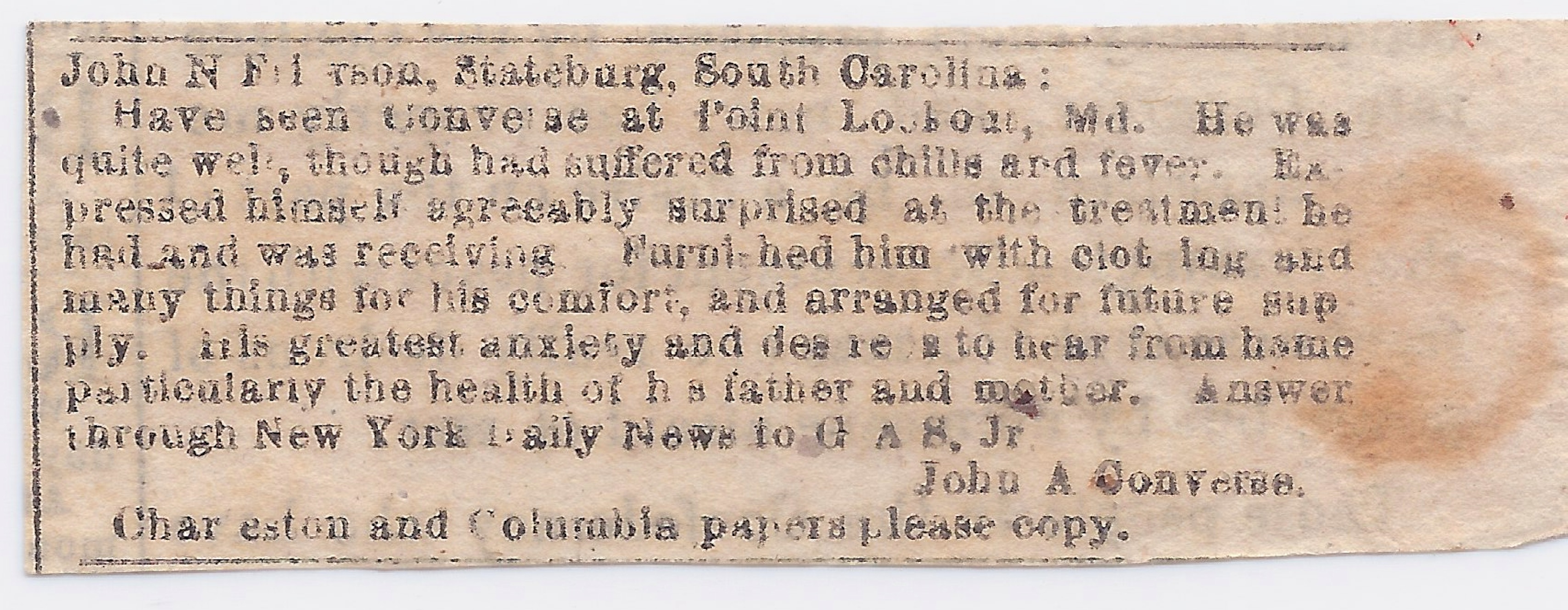
The next clipping gives details of their meeting, telling of Converse’s surprise at his good treatment by his captors, the supplies that John Converse has brought and that he will be returning to see the prisoner.  We are not sure of the actual time of this visit to Point Lookout, but the reference to Converse’s “chills and fever” at the beginning of the clipping could be an indication of the illness that brought on his death in the camp within a few weeks on July 29, 1864.prisoner_converse 1

Letter from Wilmington, NC, Nov. 22, 1865

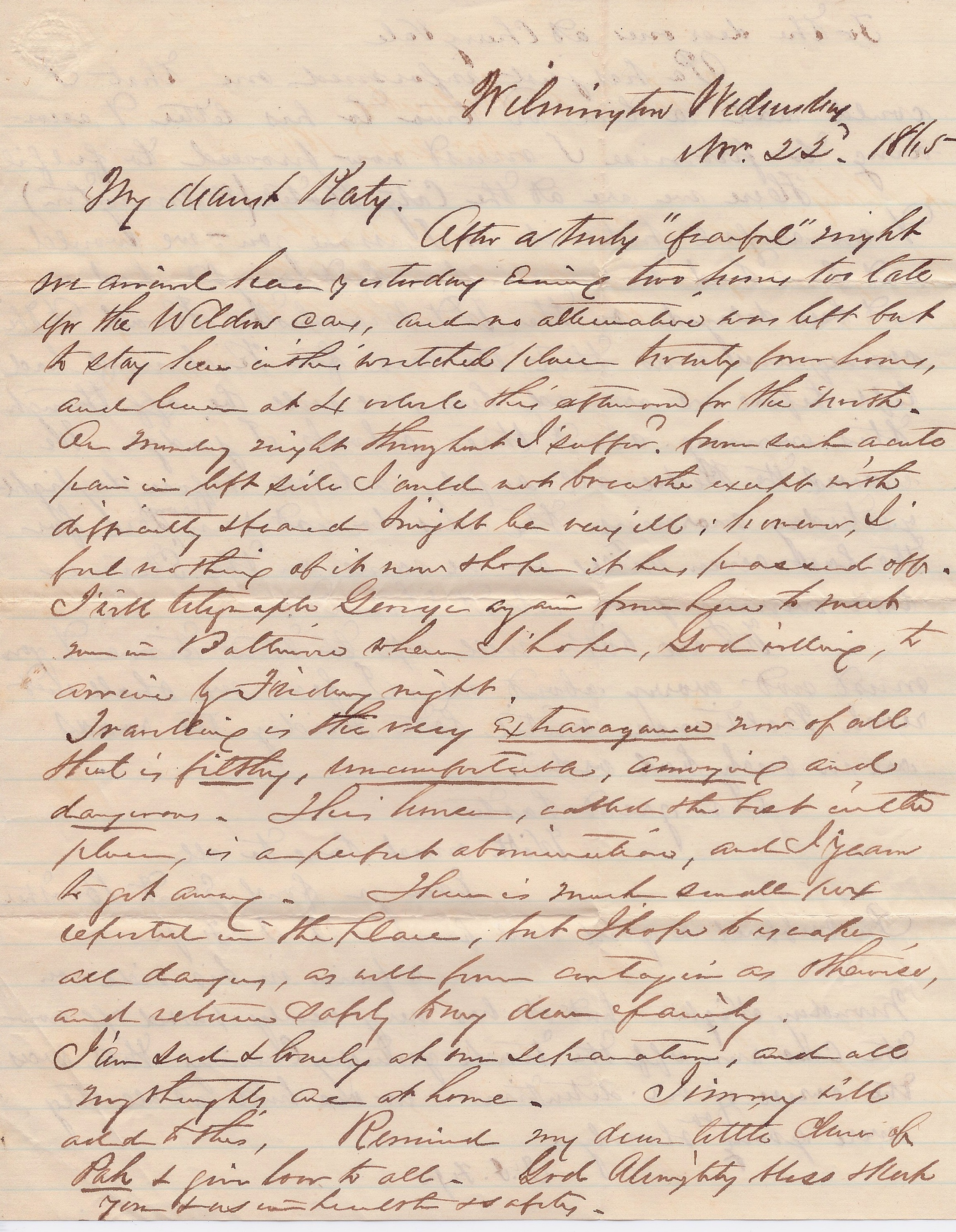
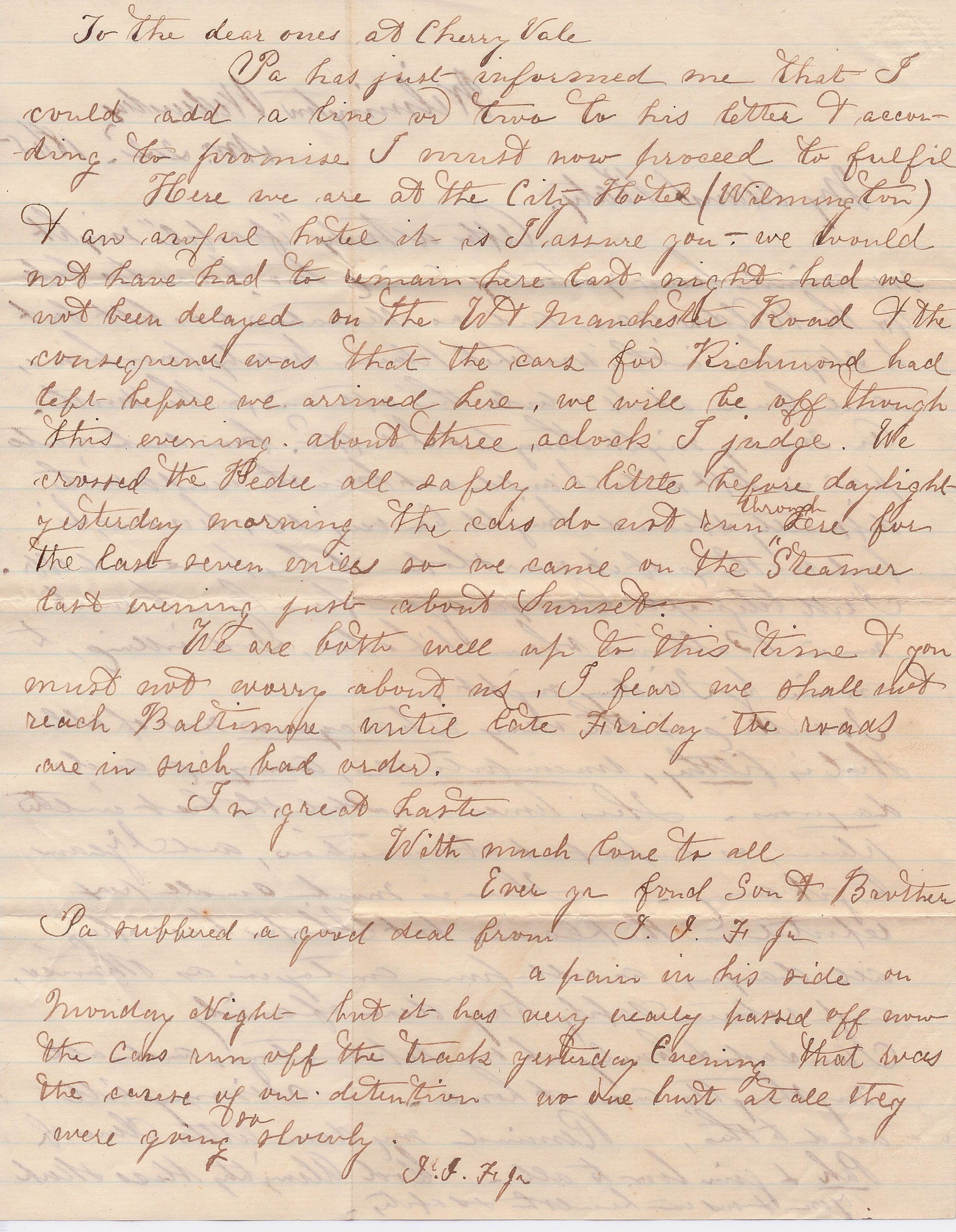
It’s been 150 years since the letter you see below was written by my great-great-grandfather John Napolean Frierson (1818 – 1887) to his wife Katherine Converse Frierson (1827 – 1899). It tells of the start of the journey he and their son James Julian Frierson, Jr. (1849 – 1891) (my great-grandfather, called “Jimmie”) are making from their Cherry Vale home in Stateburg, SC, to Baltimore, Maryland, to pick up the body of Augustus Converse Frierson (25 June 1845 – 29 July 1864) who had died as a prisoner of war in the camp at Point Lookout, Maryland.  He was called Converse and was John Napolean’s and Katherine’s oldest son. Converse was a private in the Charleston Light Dragoons (company K of the 4th Regiment of South Carolina Cavalry) and was wounded and captured on May 30, 1864, at the Battle of Matadequin Creek east of Richmond, Virginia.

11_22_1865

The letter was written and mailed from Wilmington, NC, on November 22, 1865, and describes the first two days of their trip North.  This first leg of the trip on the Wilmington & Manchester railroad was slow as the rails were in very bad shape and it took them around 24 hours to make the roughly 175 mile trip. Their intention was to arrive in Wilmington in time to catch the Wilmington & Weldon train to Richmond, but they missed it and had to spend the night of November 21 at the City Hotel downtown on the Northwest corner of Market and 2nd Streets.  John Napolean’s handwriting is very hard to decipher and I’ll give an almost full transcription of his letter so you can see how distressing the trip was and how unimpressed they were with Wilmington!  Jimmie’s writing on the back the page is much easier to read, though it’s done in a fairly stilted, schoolboy style (he was only 16 years old at the time).  I’ll include his letter below and a complete transcription of it too.  

“Wilmington Wednesday Nov. 22, 1865.

My Dearest Katy.   After a truly “fearful” night we arrived here yesterday evening two hours too late for the Weldon cars, and no alternative was left but to stay here in the wretched place twenty-four hours and leave at 4 o’clock this afternoon for the North.  … (undecipherable)… I suffer from such acute pain in left side I could not breathe … (undecipherable)… I might be very ill;  however, I feel nothing of it now and hope it has passed off.  I will telegraph George again from here to meet us in Baltimore when I hope, God willing, it arrives by Friday night.  Travelling is the very extravagance now of all that is filthy, uncomfortable, annoying, and dangerous.  This house, called the best in the place, is a perfect abomination, and I yearn to get away. There is much smallpox reputed in the place, but I hope to escape all danger as well from contagion as otherwise, and return safely to my dear family.  I am sad and lonely at my separation and all my thoughts are at home.  Jimmie will add to this.  Remind my dear little Clara of Pah and give love to all.  God Almighty bless and keep you and us in health and safety. “

11_22_1865_2“To the dear ones at Cherry Vale.    Pa has just informed me that I could add a line or two to his letter and according to promise I must now proceed to fulfill.  Here we are at the City Hotel (Wilmington) and an awful hotel it is I assure you.  We would not have had to remain here last night had we not been delayed on the W & Manchester Road and the consequence was that the cars for Richmond had left before we arrived here.  We will be off though this evening about three o’clock I judge.  We crossed the Pedee all safely a little before daylight yesterday morning.  The cars do not run through here for the last seven miles so we came on the Steamer last evening just about sunset.    We are both well up to this time and you must not worry about us.  I fear we shall not reach Baltimore until late Friday the roads are in such bad order.    In great haste with much love to all  Ever your fond Son and Brother,  J. J. F. Jr.    Pa suffered a good deal from a pain in his side on Monday night but it has very nearly passed off now.  The cars ran off the track yesterday evening  that was the cause of our detention.  No one hurt at all they were going so slowly.   J. J. F. Jr. “ACFTombstone

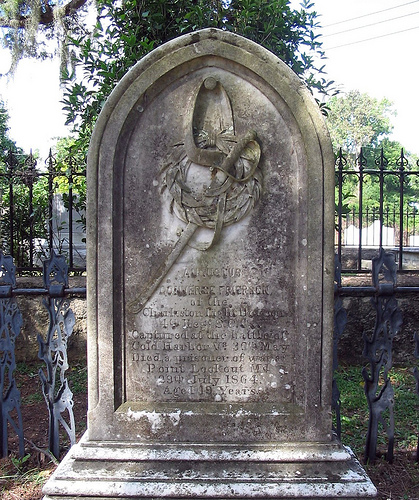
Converse Frierson’s tombstone in the Holy Cross Church cemetery in Stateburg is shown here with the inscription: “Augustus Converse Frierson of the Charleston Light Dragoons, 4th Reg., SC Cav, Captured at the Battle of Cold Harbor, Va., 30th May, Died a Prisoner of War at Point Lookout, Md., 29 July 1864, Aged 19 years.”   A recent book on the Charleston Light Dragoons (Sons of Privilege, by W. Eric Emerson), gives the roster of all the Dragoons based on information located in the National Archives.  He describes Converse as follows:   “Enlisted as a private 4/1/63 at Pocotaglio, $50 bounty money due; present until 9-10/63 when sick in camp; sick in camp until 12/63;  on sick furlough 1/1/64, certificate furnished;  captured 5/30/64 at Old Church [Matadequin Creek] and sent to Point Lookout, Md.;  died in the hands of the enemy on 7/30/64.”  

I have several additional letters written home by John Napolean from this sad trip in 1865 and I’ll be posting them soon.


Darlington County Courthouse by Jack Frierson

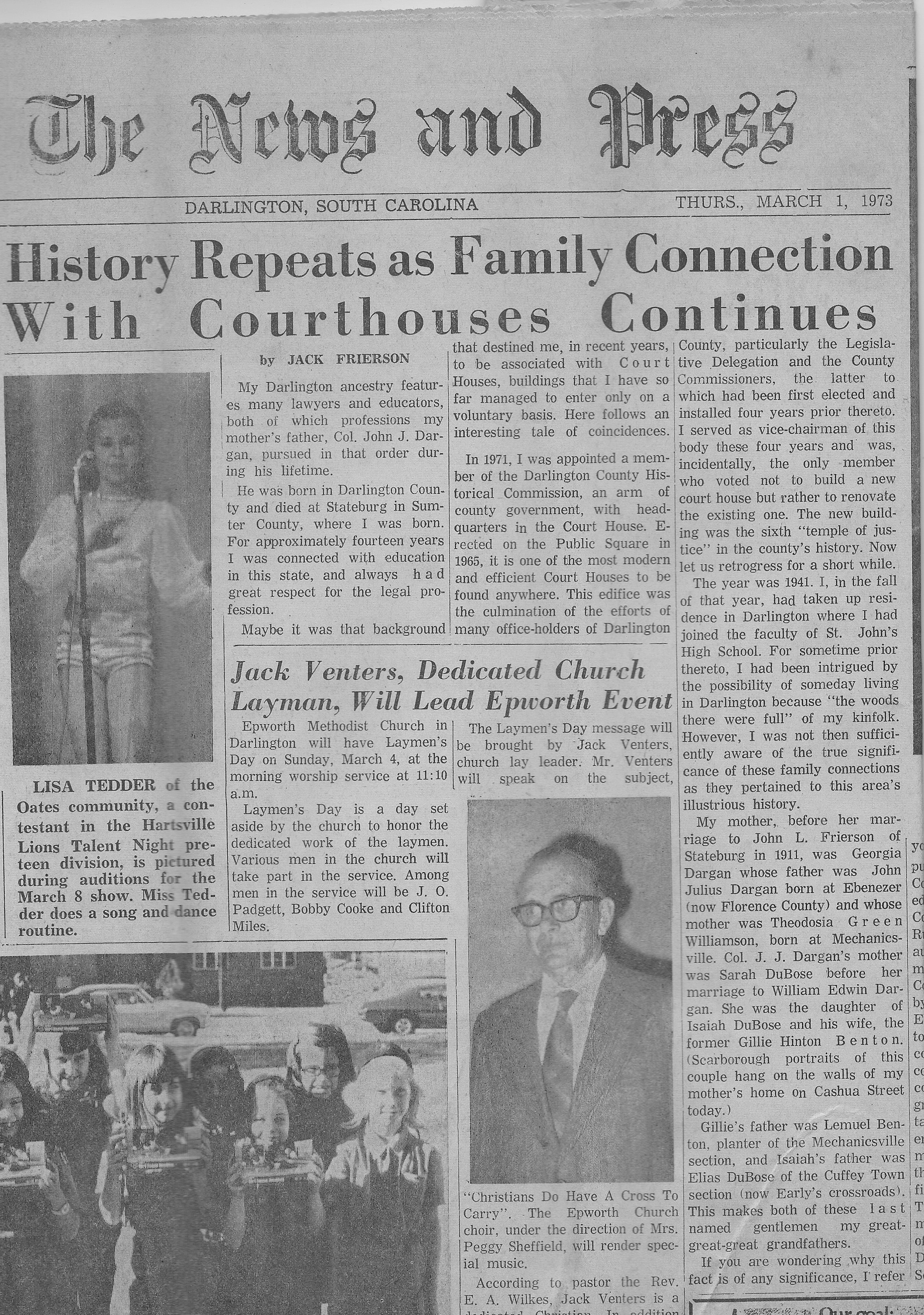
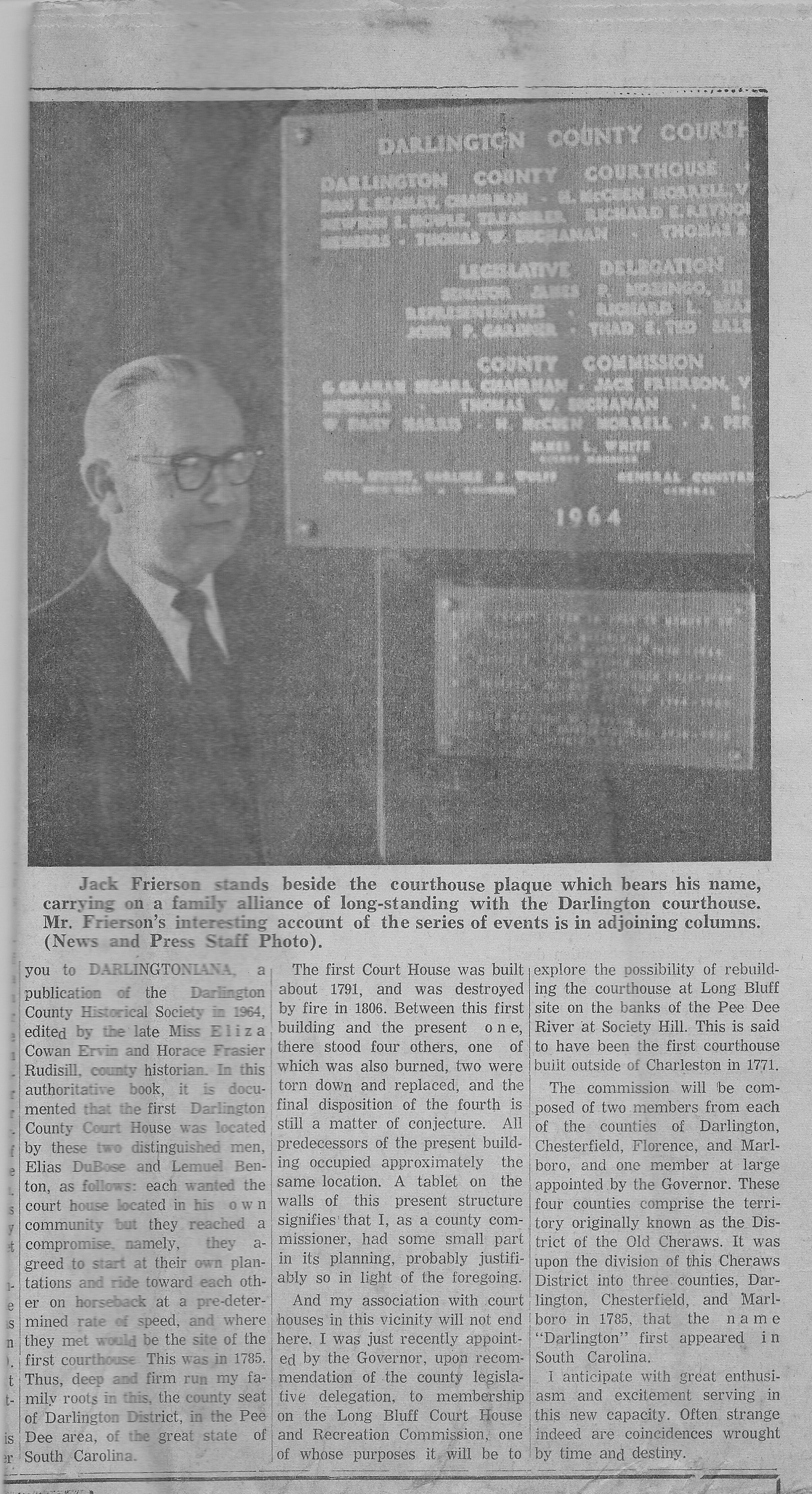
It seems that my tendency to keep everything of family importance comes to me naturally… I found the March 1, 1973, issue of the Darlington News and Press as I was going through some things found in my parents’ attic, and on the front page was an interesting article written by my late uncle, John Lawrence Frierson, Jr. (Jack).  He gives some history of the current Darlington County Courthouse and its predecessors, going back to the original one built circa 1791 on the same site.   His story of how that courthouse was sited in 1785 by two of my great-great-great-great grandfathers (Elias DuBose and Lemuel Benton) is one that I’ve never heard before and I thought would be an interesting one to post!  Click on each of the two images to enlarge them so you can read the article…

DarlingtonCountyCourthouse1DarlingtonCountyCourthouse2

G. Dargan Frierson (1921-2014)

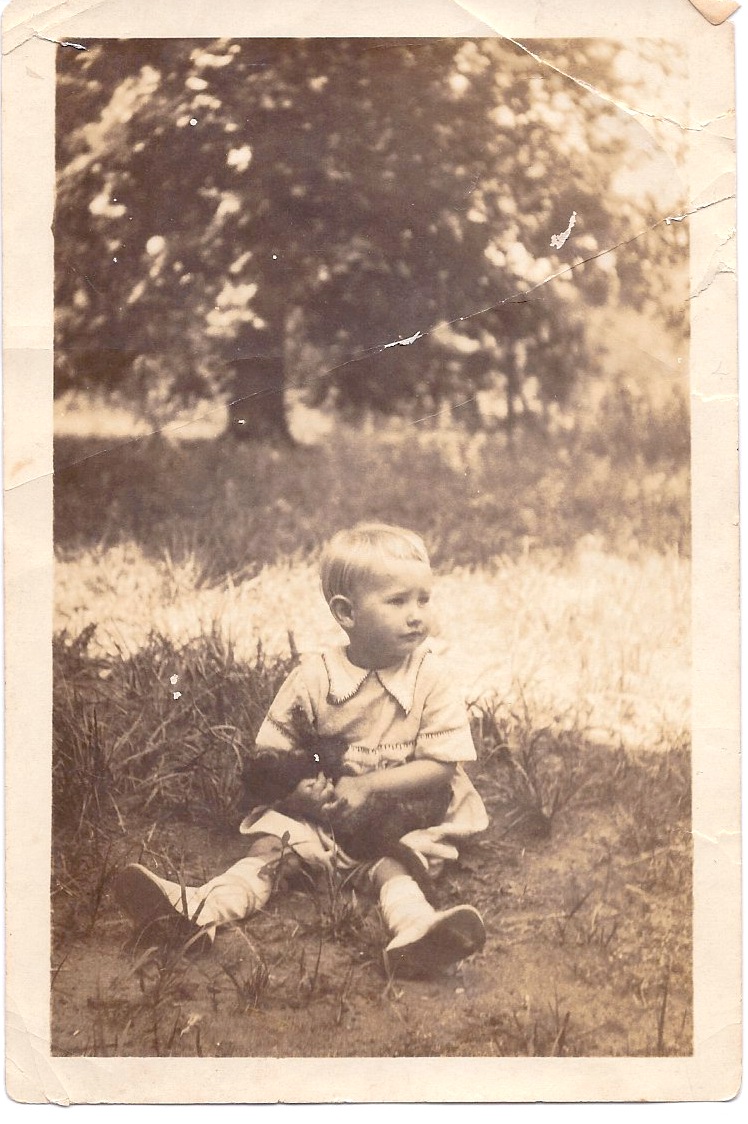
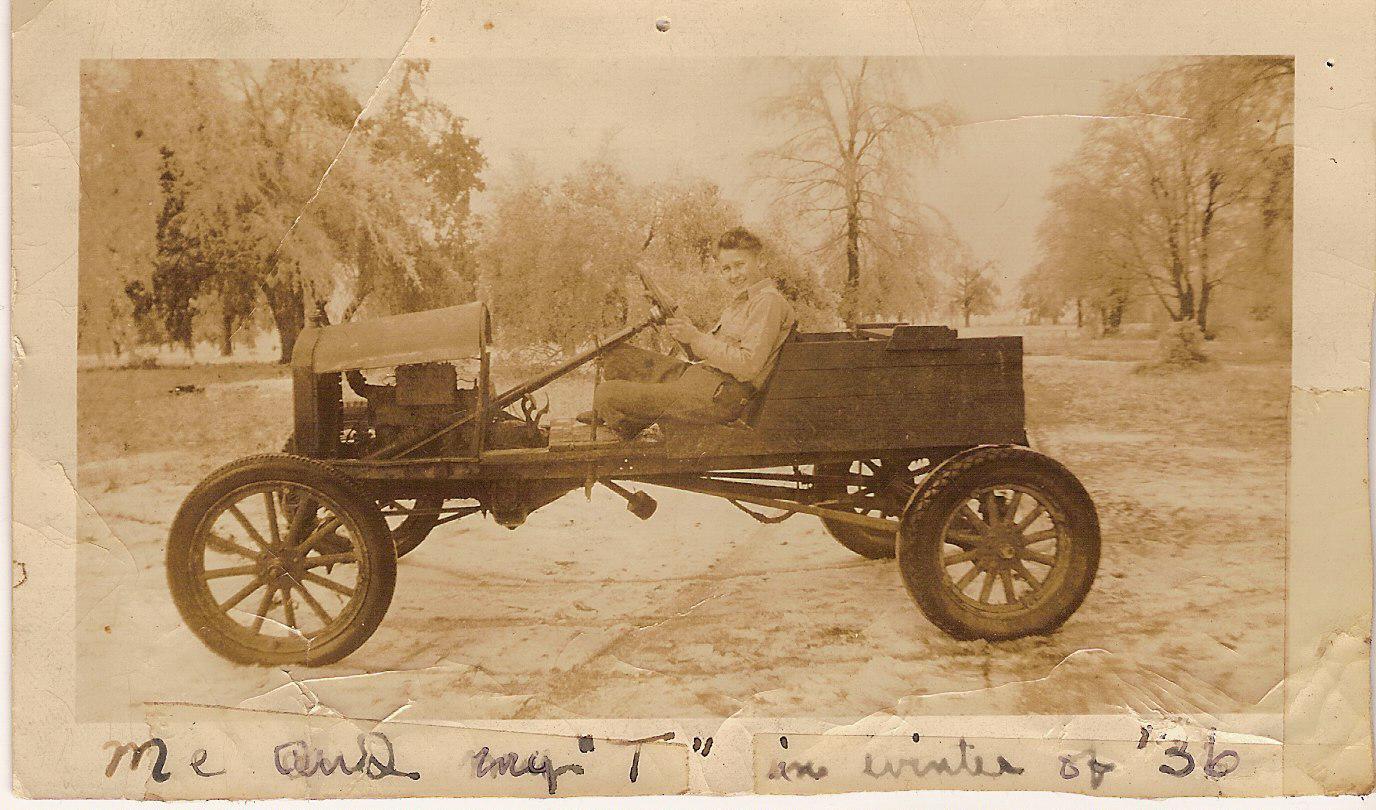
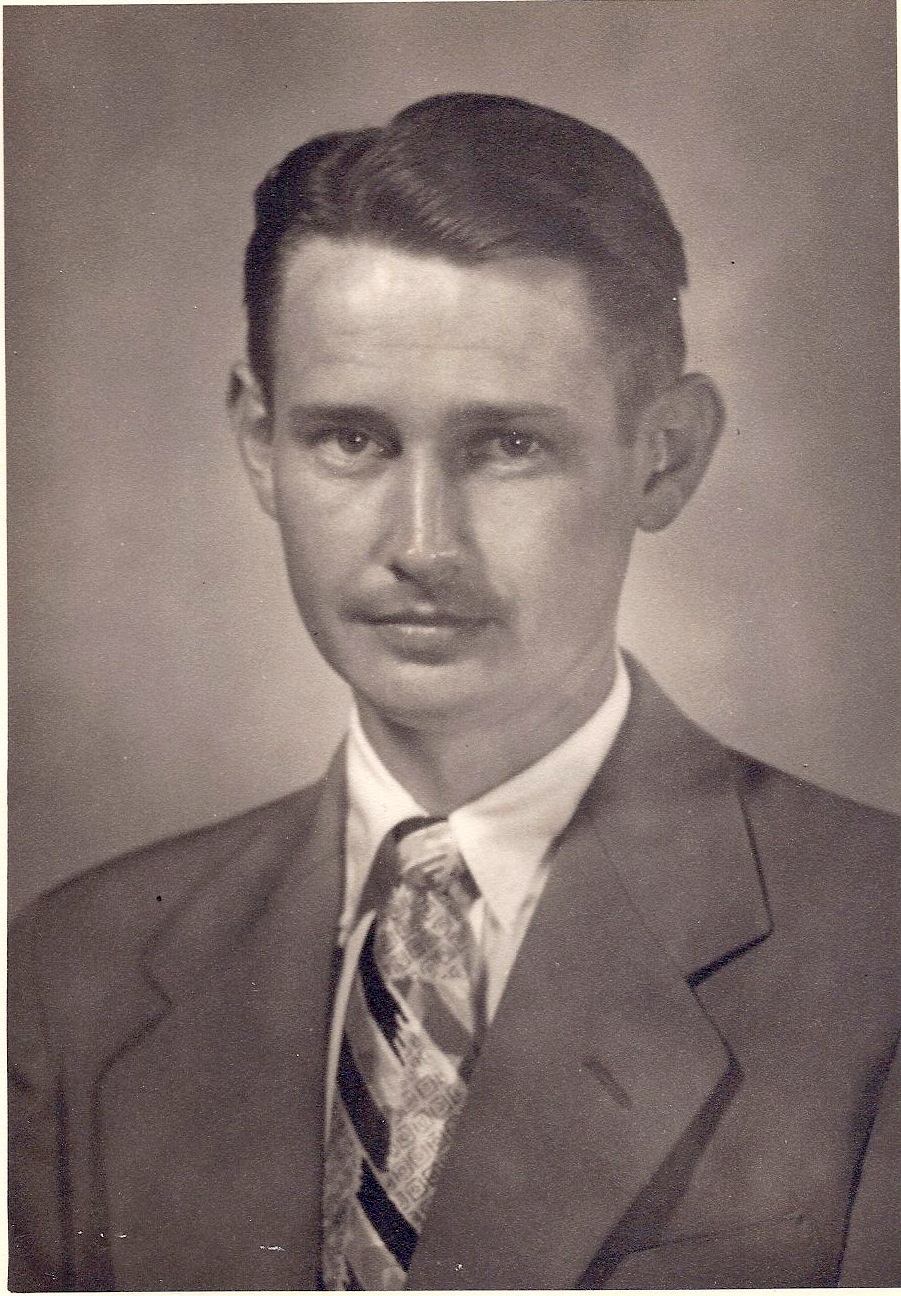
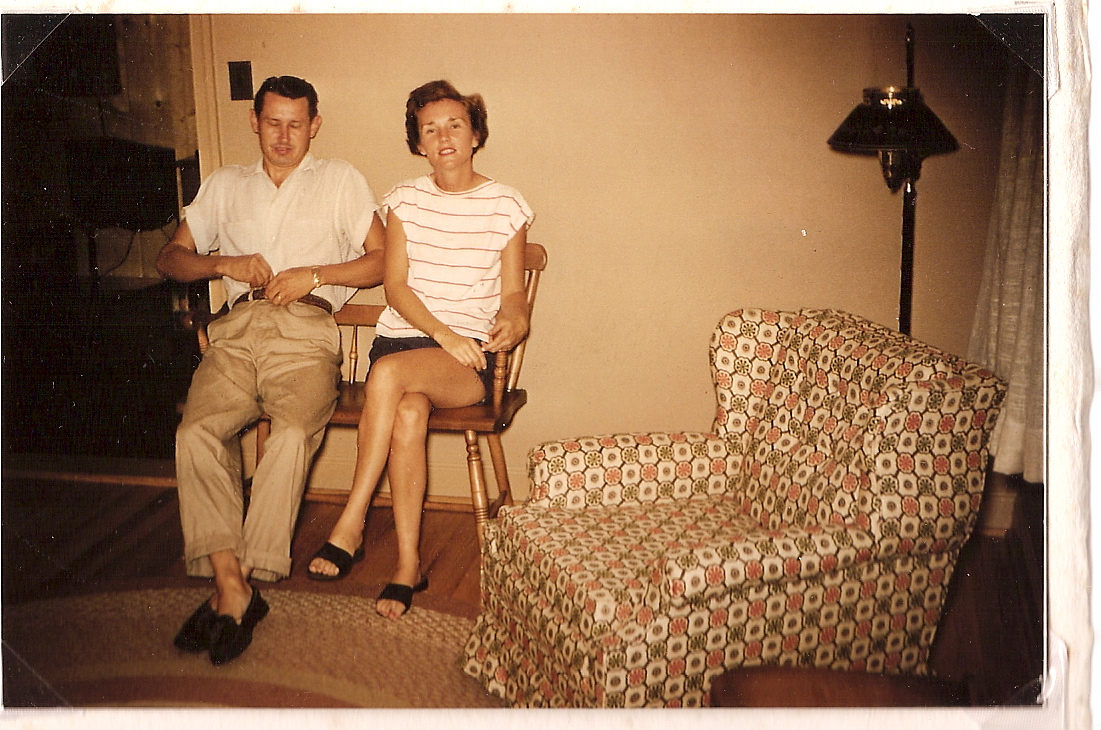
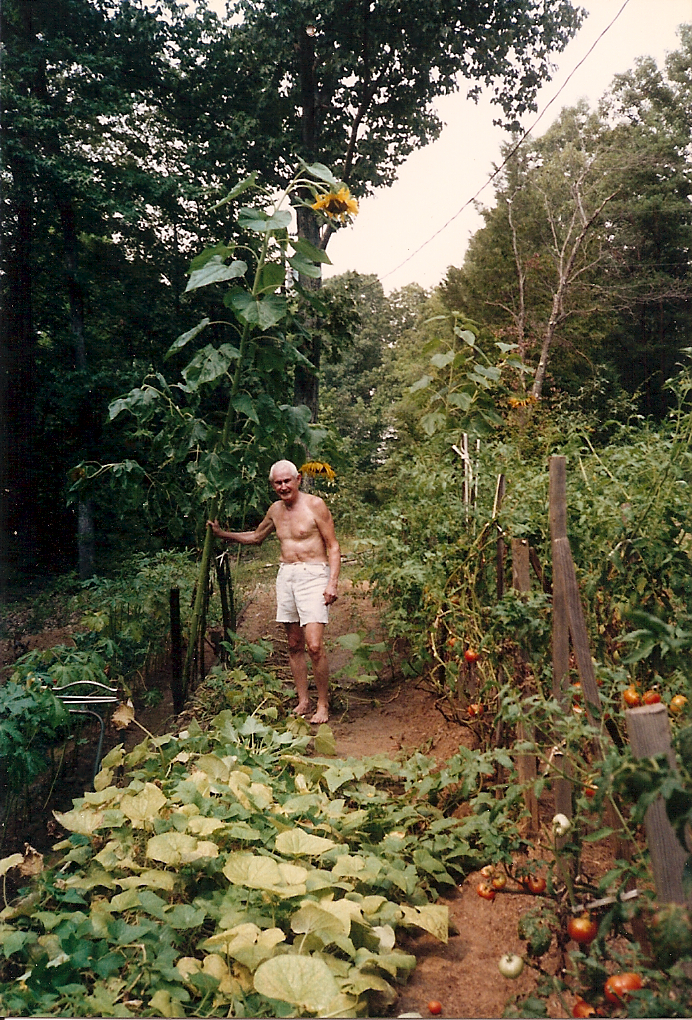
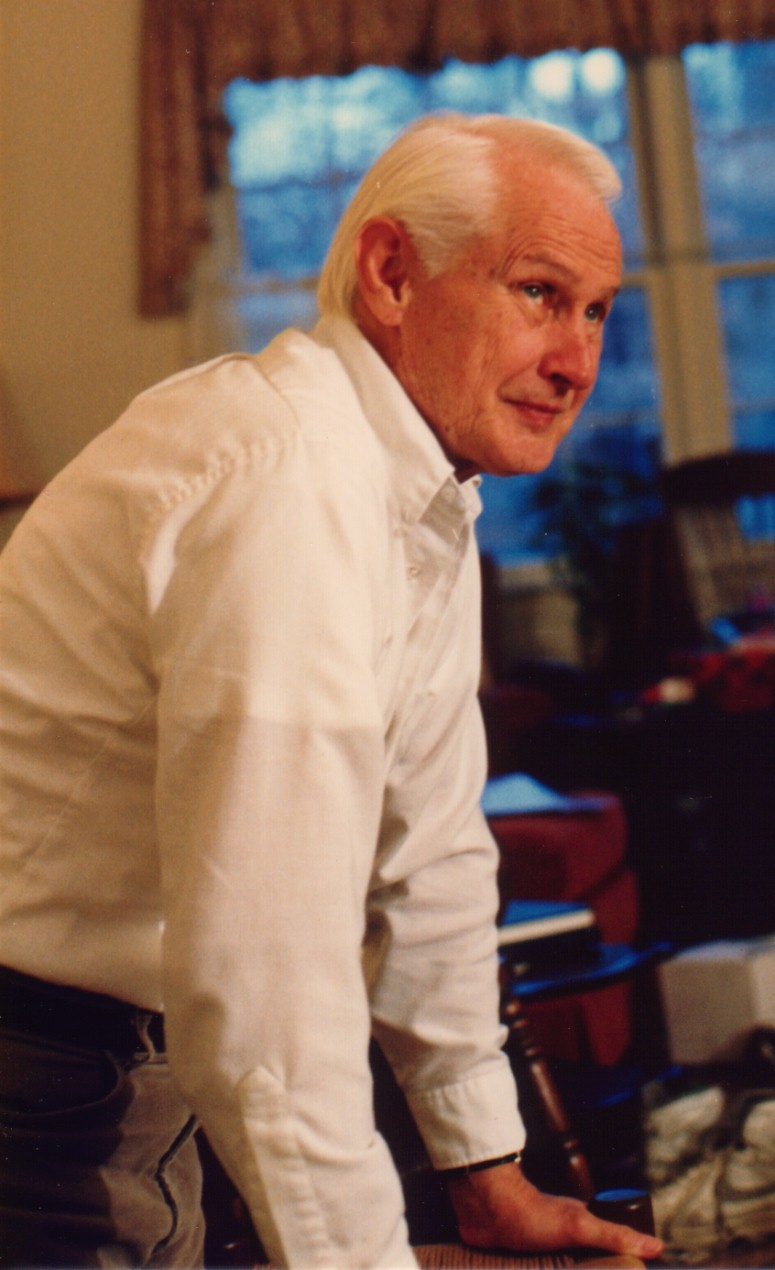
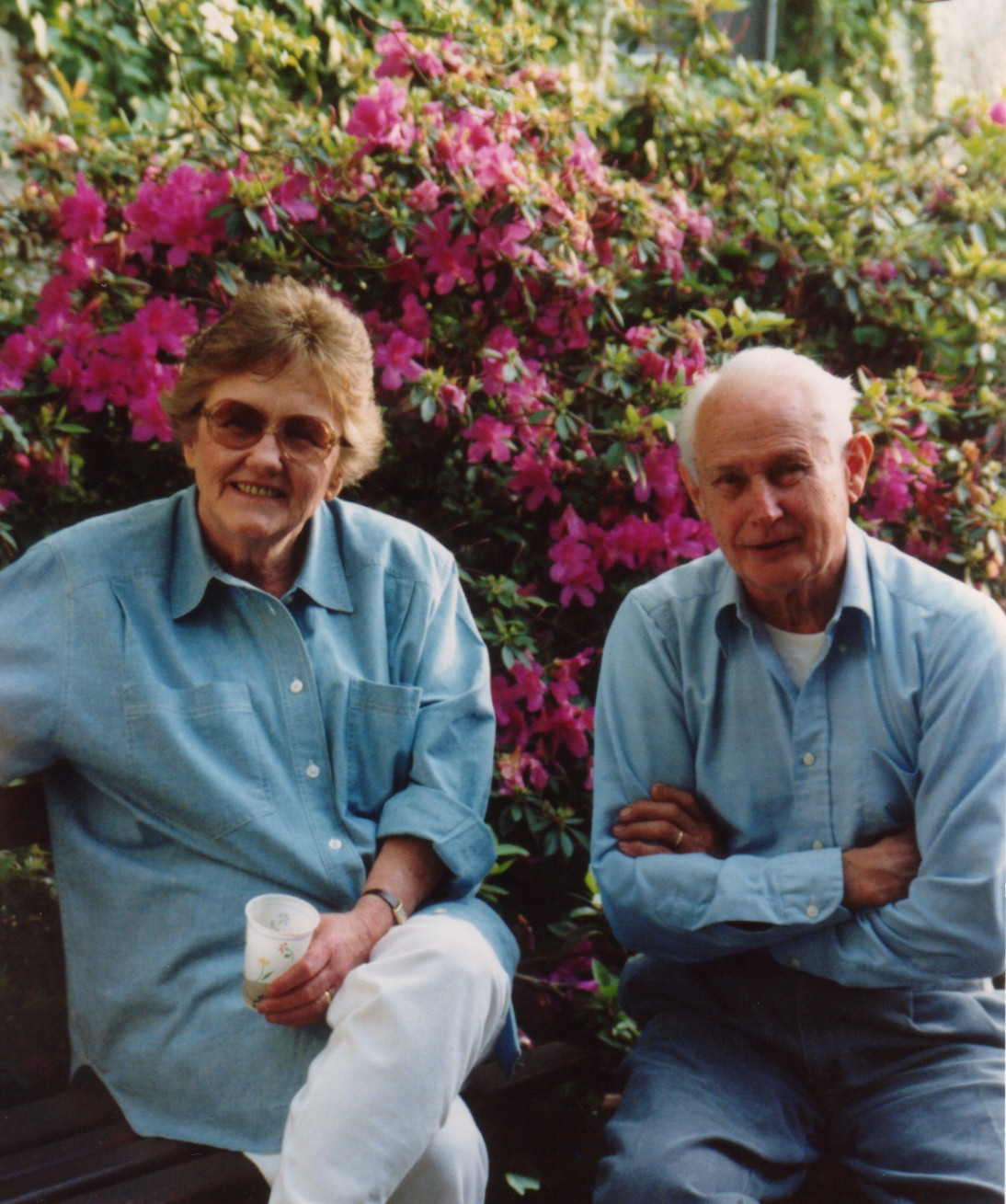
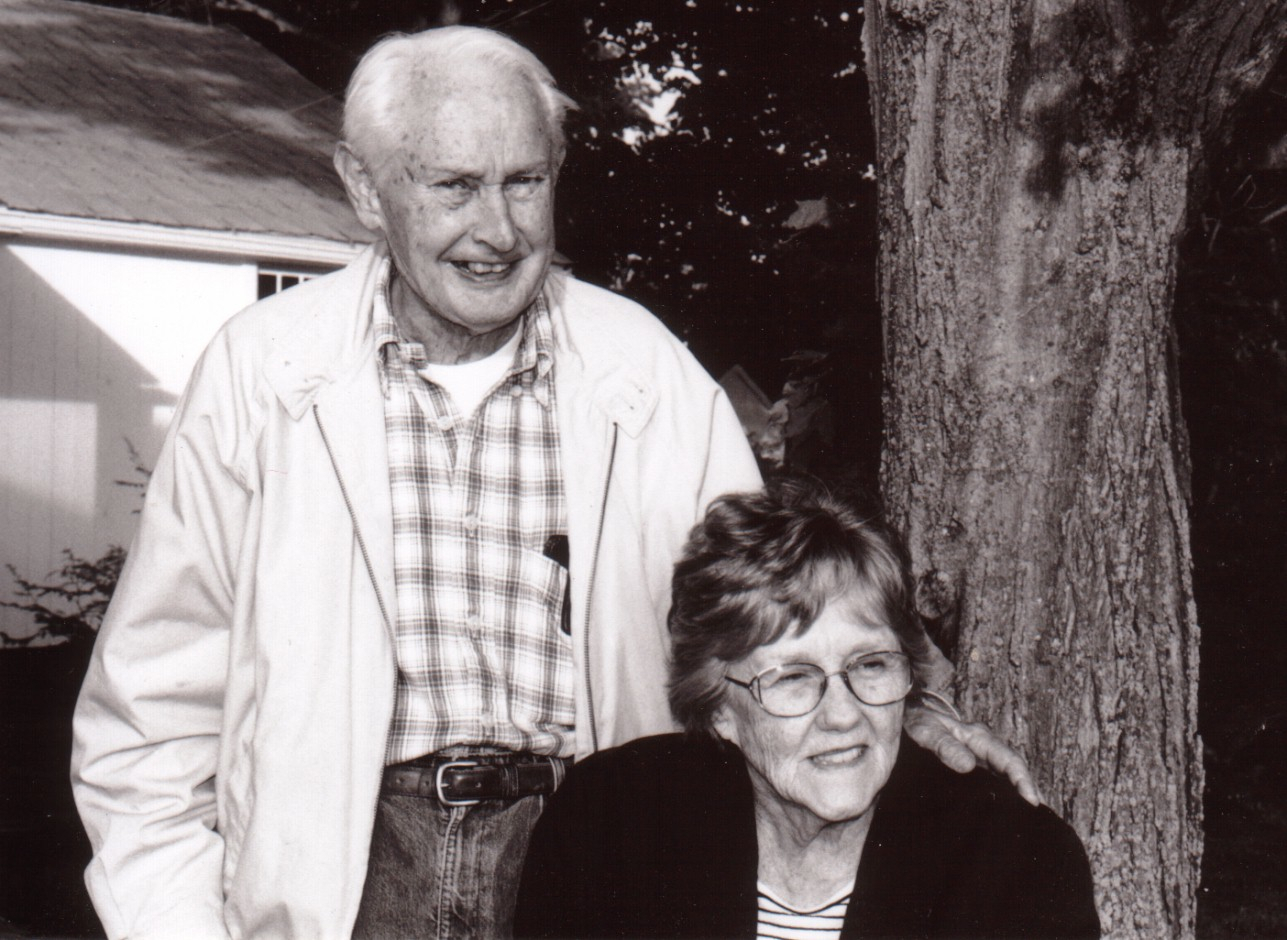
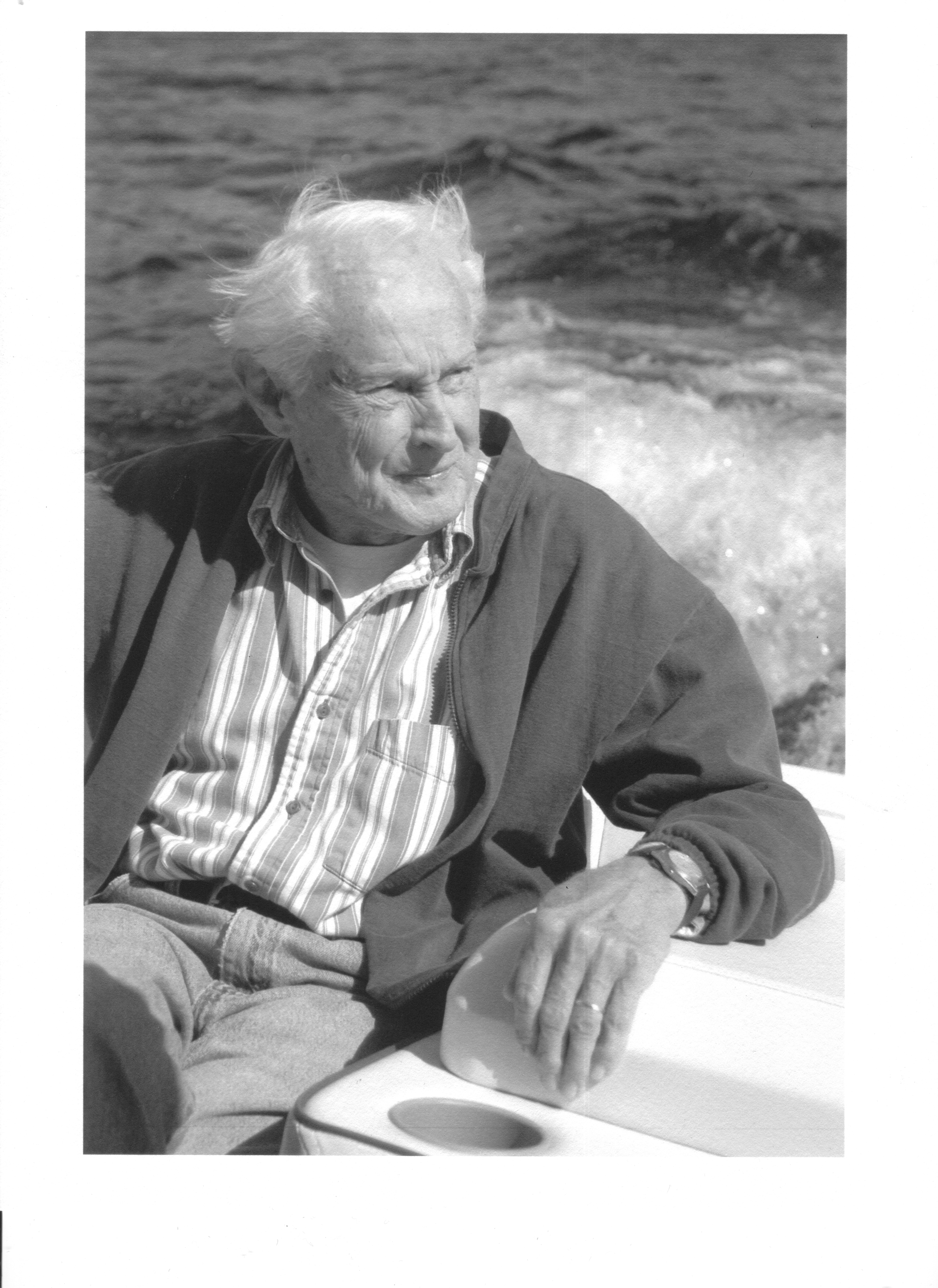
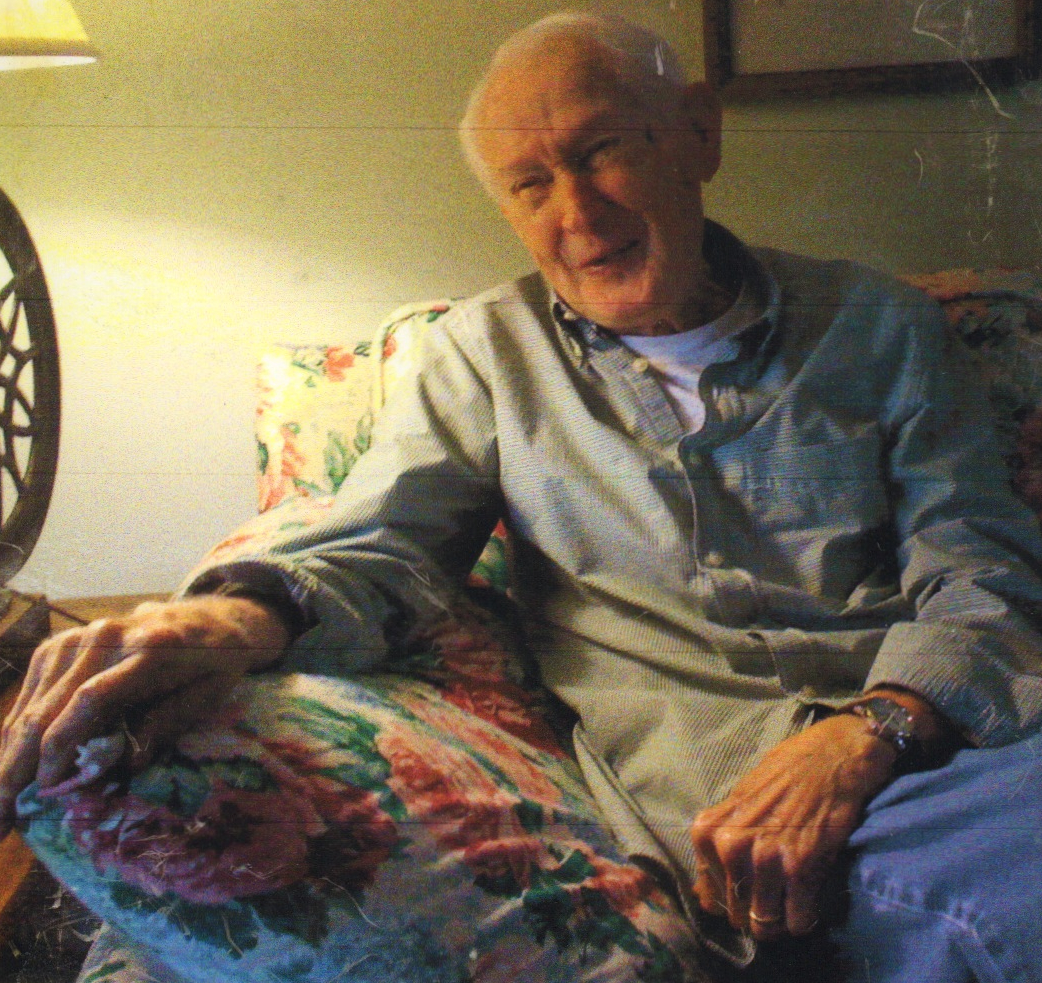
Today is the 93rd anniversary of the birth of my father, George Dargan Frierson and I thought I’d post  some pictures to remind me of him.  Most of these have been seen before, but I hope you’ll enjoy them none the less…. GDFAge2@CV  me & my TJLF&Family 1dad postcardmom_daddorothydad_bellinghampapaYoungAgentwoodview02sc0071aa7edadmom_dad1mom&daddad_seattle  Dad_couch

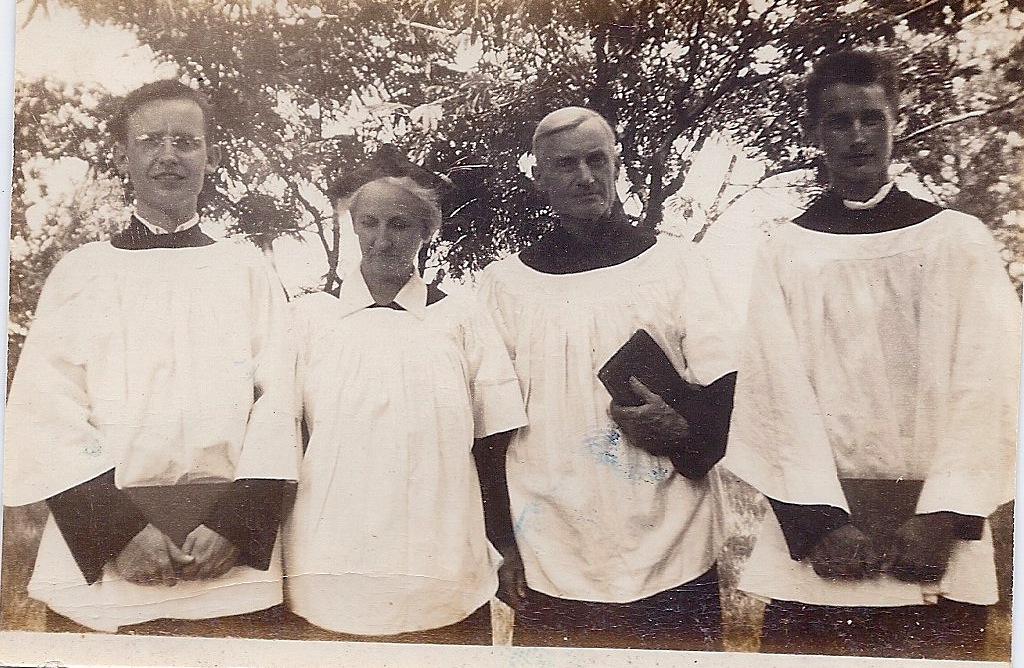
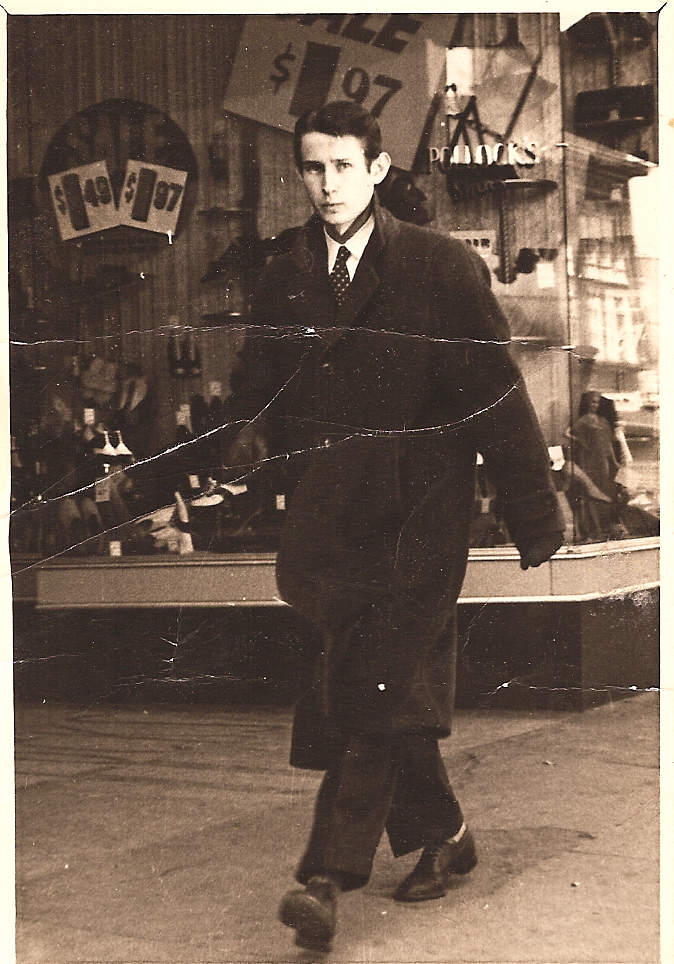
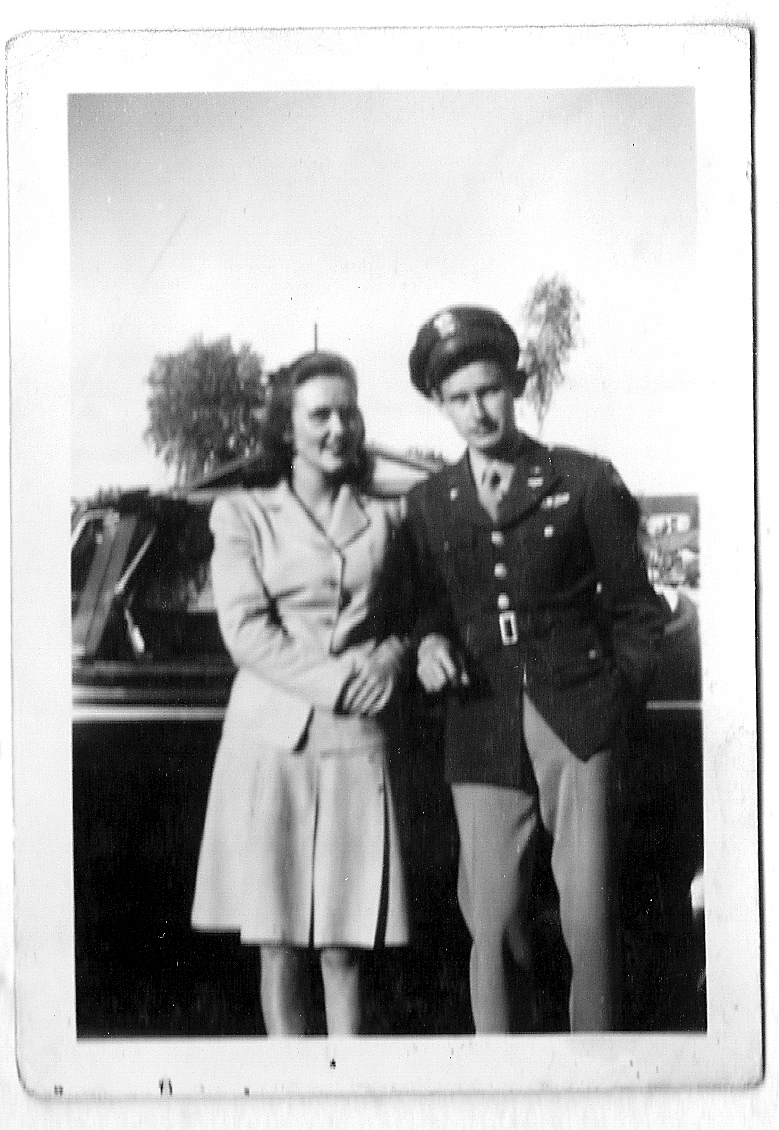
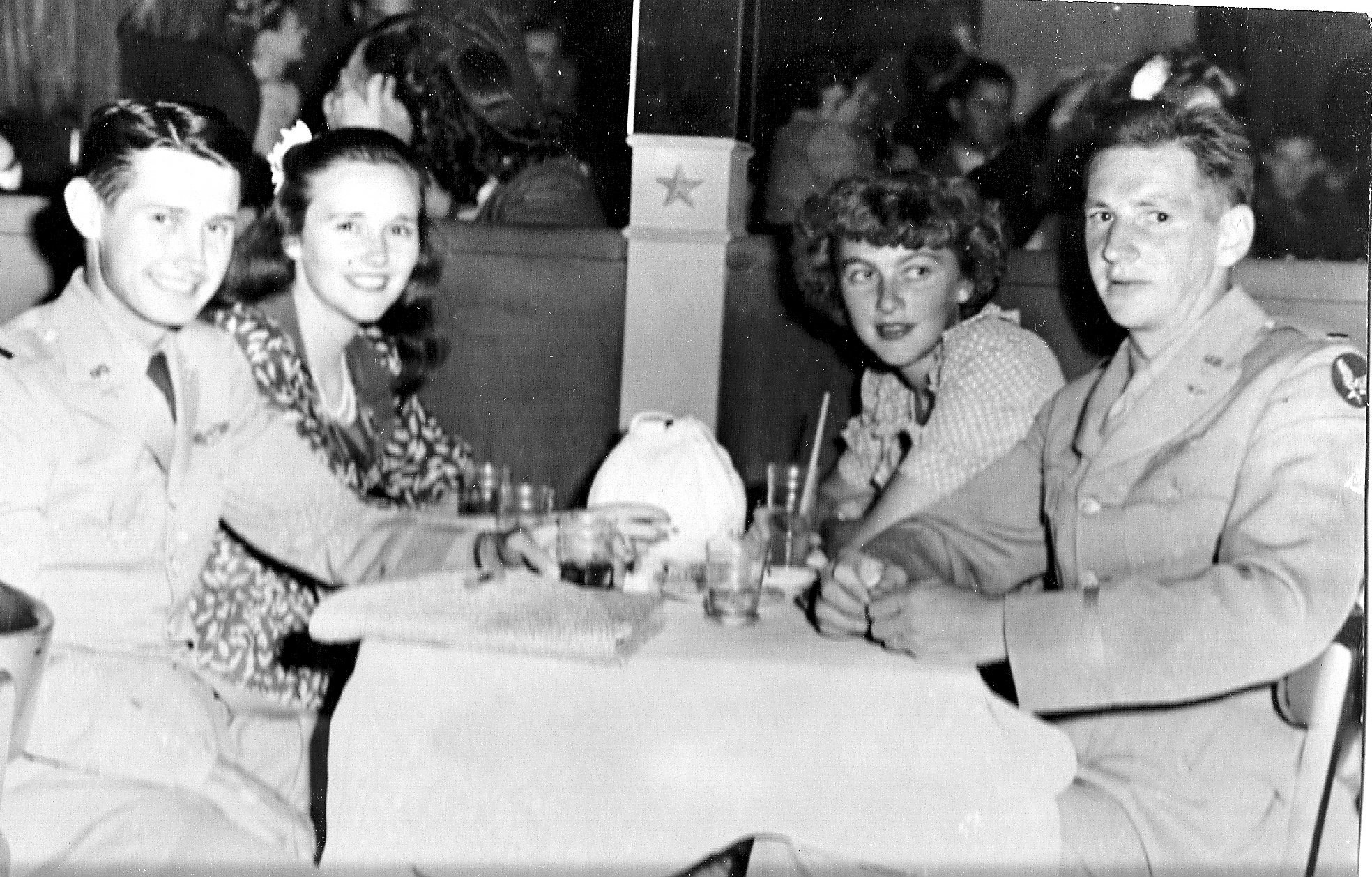
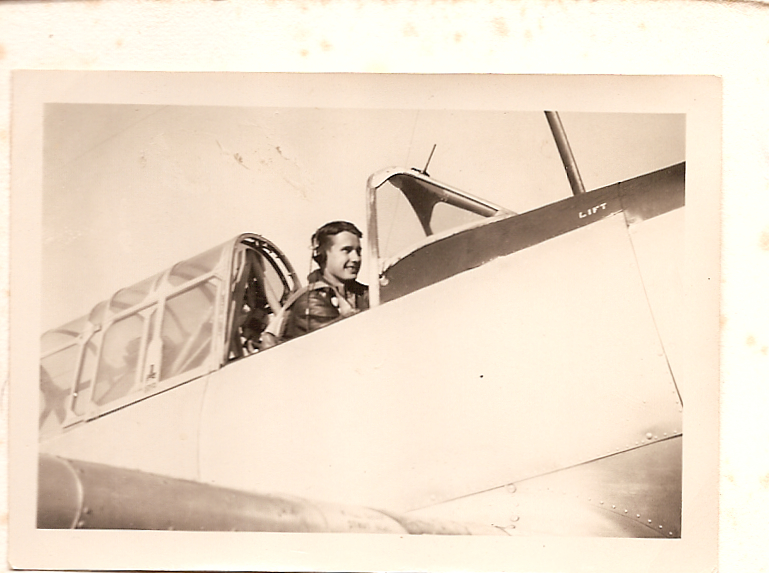
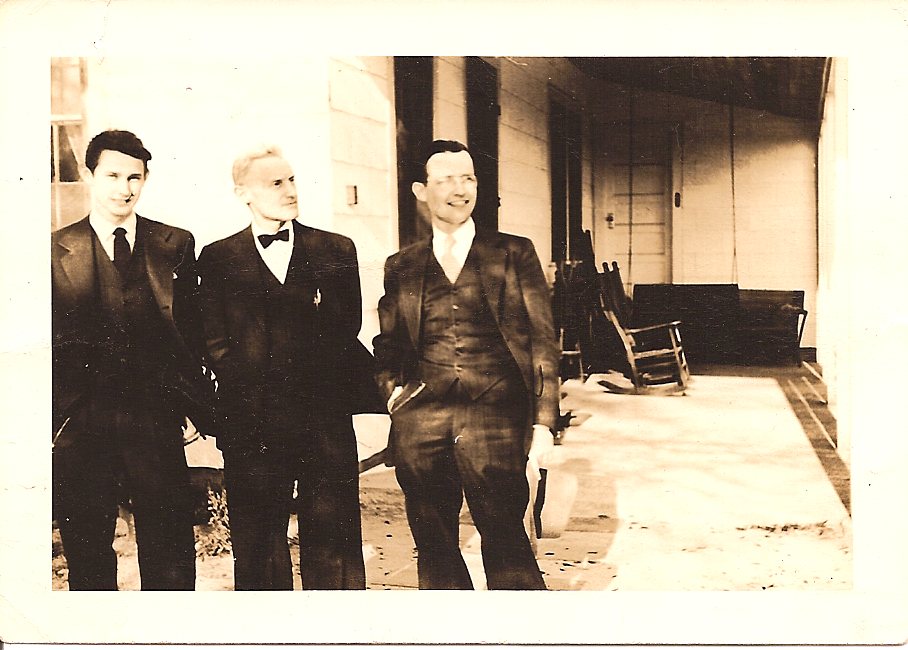
Click on a picture to see an enlargement of it… (From top to bottom, left to right)  1. Age two years in the yard at Cherry Vale;  2.  With his customized Model T Ford in the winter of 1936;  3. At Holy Cross Church (left to right, brother John L. Frierson, Jr. (Jack), mother Georgia Dargan Frierson, father John L. Frierson);  4.  Student days at the University of S.C. in Columbia;  5. Newly married to Josephine Daniels in 1944 in Taft, California;  6.  Jo and Dargan with friends Dorothy and Vic Roeder at Slapsie Maxie Rosenblum’s Club in Los Angeles (c. 1944);  7. Hot Pilot – I think this was taken in Bellingham, WA, when he came to visit his new in-laws!  8.  With his brother Jack and father John outside their home, Fairview, in Stateburg, S.C.;  9.  Young FBI agent, in Detroit or Cleveland perhaps around 1950;  10.  With Mom at 2503 Woodview Drive in Greensboro, NC (c. 1954)  11. In the Hyco Lake house garden, with sunflower!  12.  Retired and relaxed at home…  13.  With Mom on a visit to Wilmington  14.  With Mom at John and Alice Ann’s wedding in Connecticut in the summer of 2000;  15.  Boat ride in Seattle, summer 2003.  16. On the couch in the living room at 604…


Georgia Dargan Frierson (2/4/1886 – 7/1/1974)

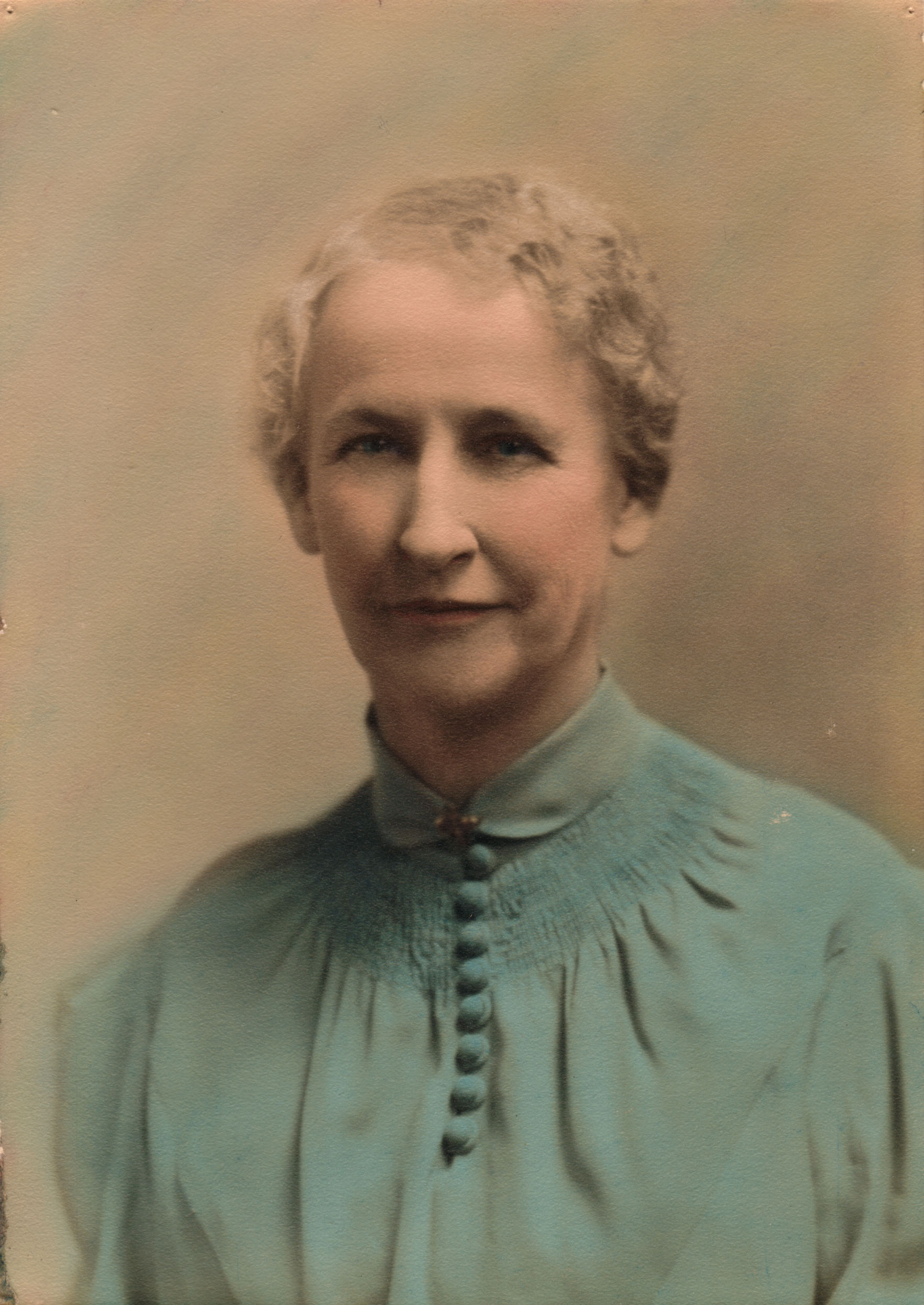
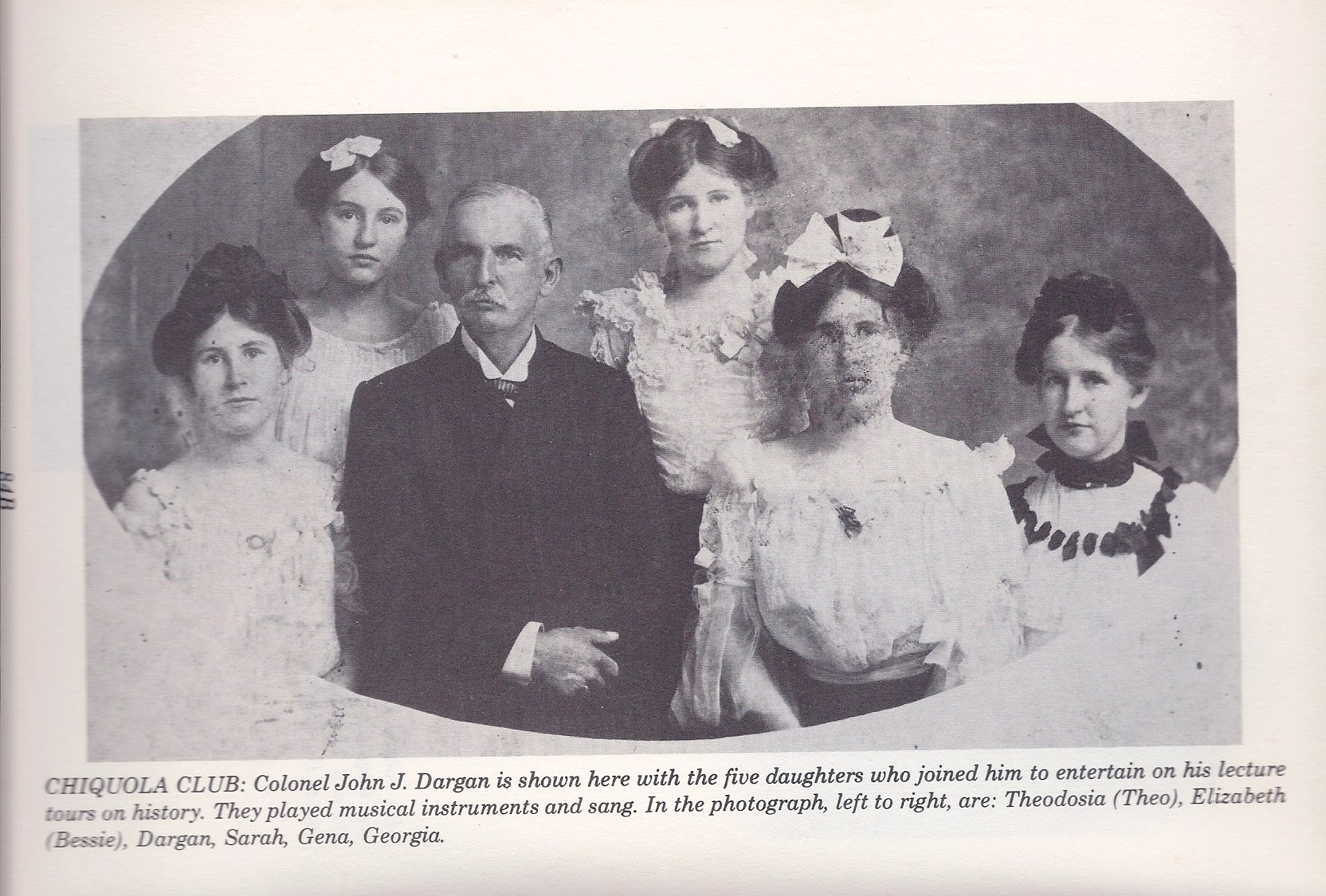
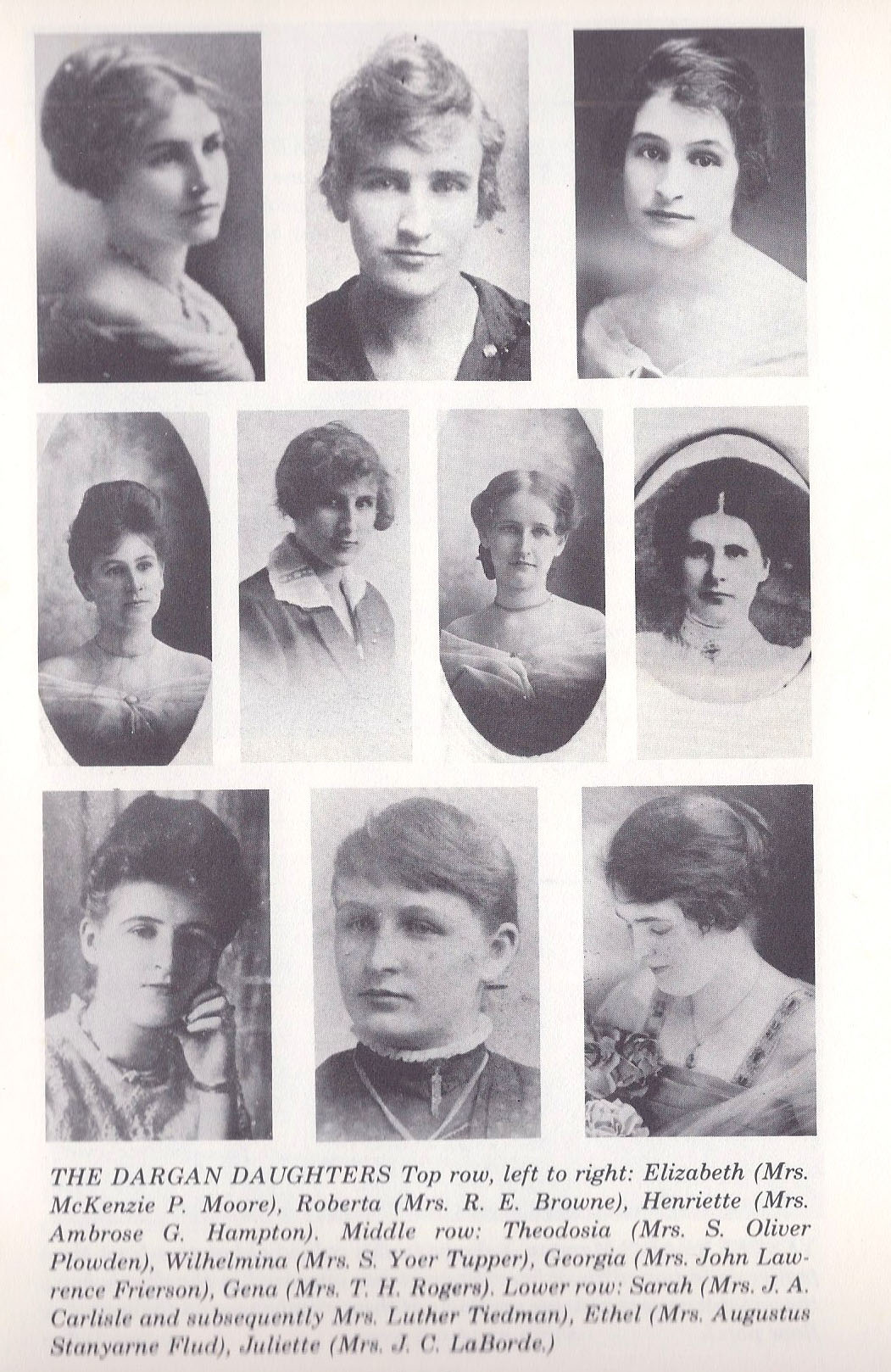
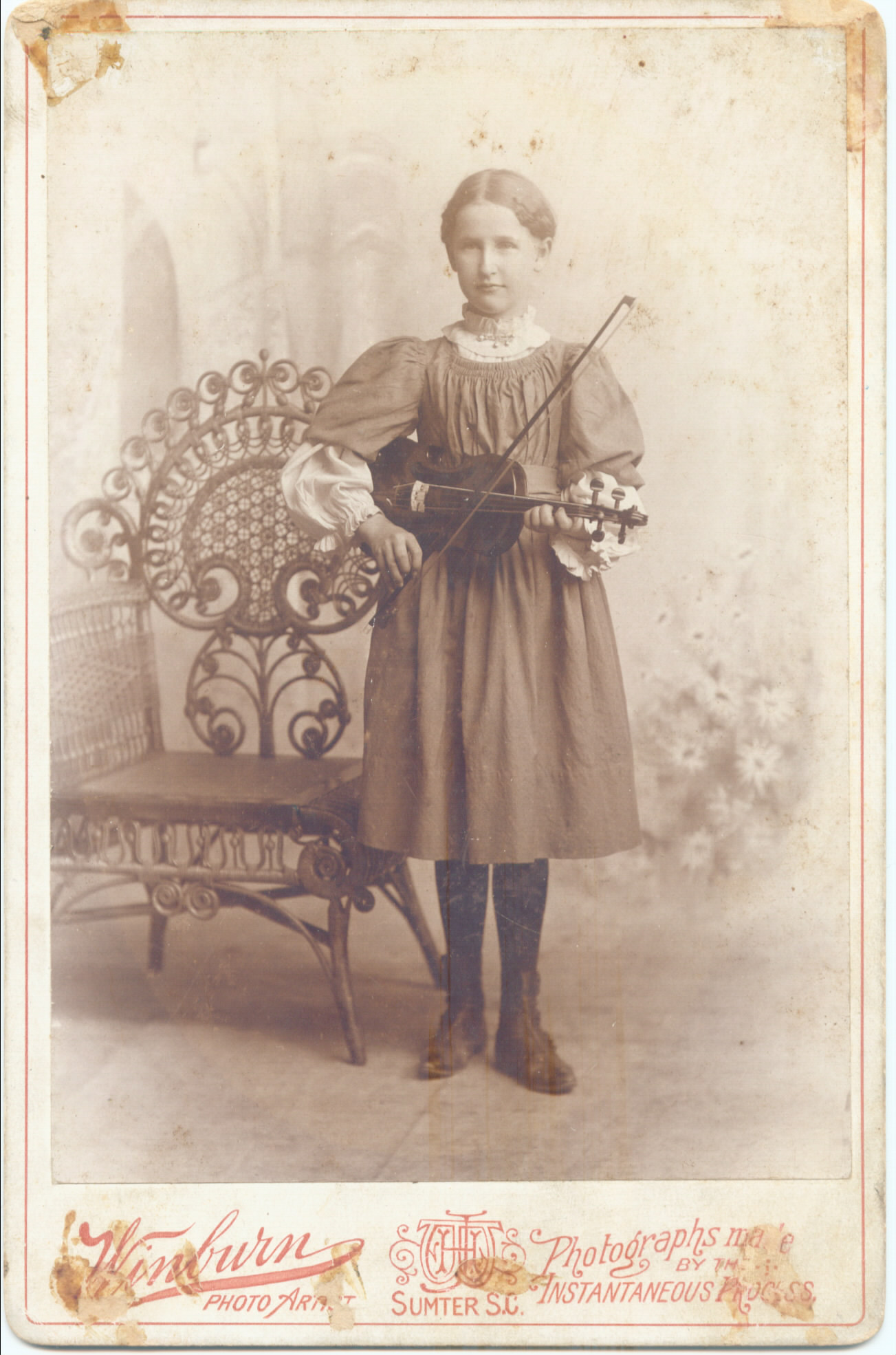
Today, February 4, 2014, is the 128th anniversary of the birth of my grandmother, Georgia Dargan Frierson.  The photo at the right was taken on Christmas day in 1937 when she was 51 years old.  She was born in Stateburg, South Carolina, the fourth oldest of the ten daughters of Theodosia Green Williamson Dargan and John Julius Dargan.grannie  She married John Lawrence Frierson (9/4/1883 – 1/30/1963) in 1911 and they had two children, John Lawrence Frierson, Jr., and George Dargan Frierson.  She was both a performer and teacher of music all her life, starting in her early teenage years as a performing member of the Chiquola Club with her father and four of her sisters.  The Chiquola Club  was the creation of her father, John Julius Dargan, and its purpose was to tour South Carolina,  he teaching and lecturing its citizens about the state’s proud history, all the while entertaining the audiences with music performed by the Dargan daughters.  Here’s a description from the biography of J.J. Dargan by  Henry F. Cauthen:

fromCauthenJJD2“The sight was one which drew attention on the trains and in the little hotels of the time:  a small, dignified man leading five young women, animated and attractive.  The gentleman was none other than John Julius Dargan and the young women, five of his daughters.

“The time could have been any day in the period from 1899 to 1903, and the little company could be seen arriving at one of any number of South Carolina towns in the eastern area of the state, but not exclusively in that section.  In the evening they would appear in the opera house, the court house, the school auditorium or some other available hall for what was billed as an “entertainment”, but which was an event of a much more serious purpose in the heart of Colonel Dargan.  The evenings were, however, entertaining, as dozens of newspaper accounts testified. … Many accounts referred to the performing daughters as ‘Colonel Dargan’s charming and talented daughters’ .  These were no extravagant statements;  the daughters were indeed attractive and were trained, as well as talented musicians.  They played a variety of instruments and sang.  And their presence represented the practical showmanship which had popped into the creative mind of their father.  Such a venture should have a name and the colonel called it the program of the Chiquola Club”.CauthenJJD2

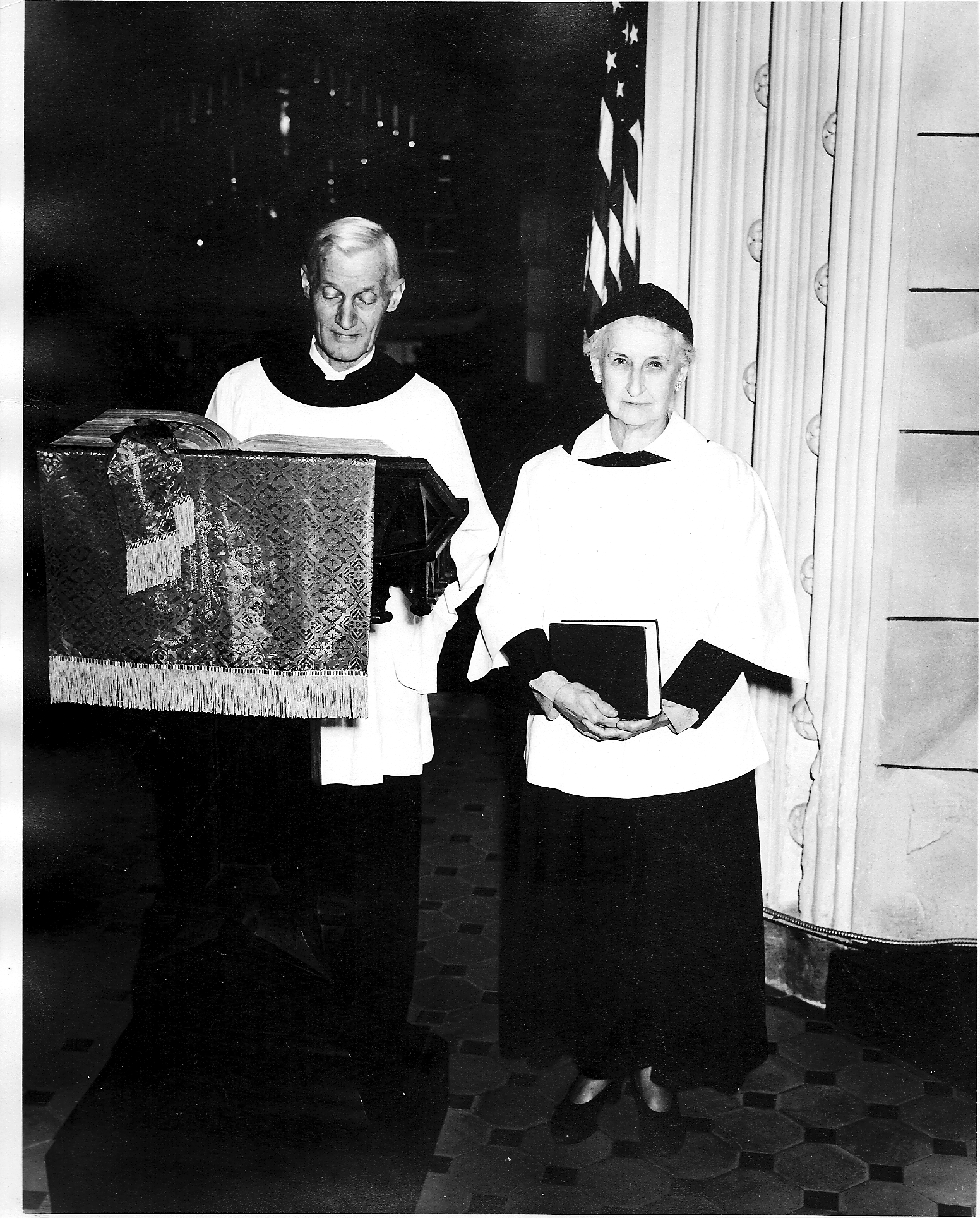
papa_grannieGeorgia played both the piano and violin and also sang with her sisters when they were on tour.  By 1905, J.J. Dargan had opened the General Sumter Memorial Academy in Stateburg, S.C., and my grandmother was the music teacher of violin and piano, a career she would continue for most of her life in both public schools and for private students.  Georgia Dargan - age 12Also, her 50-or-so-year position as the organist at the Holy Cross Episcopal Church in Stateburg surely can’t be beaten!  The photo to the right was contributed by my cousin Lil Frierson Wetmore and shows our grandmother around age 12 years with her violin.

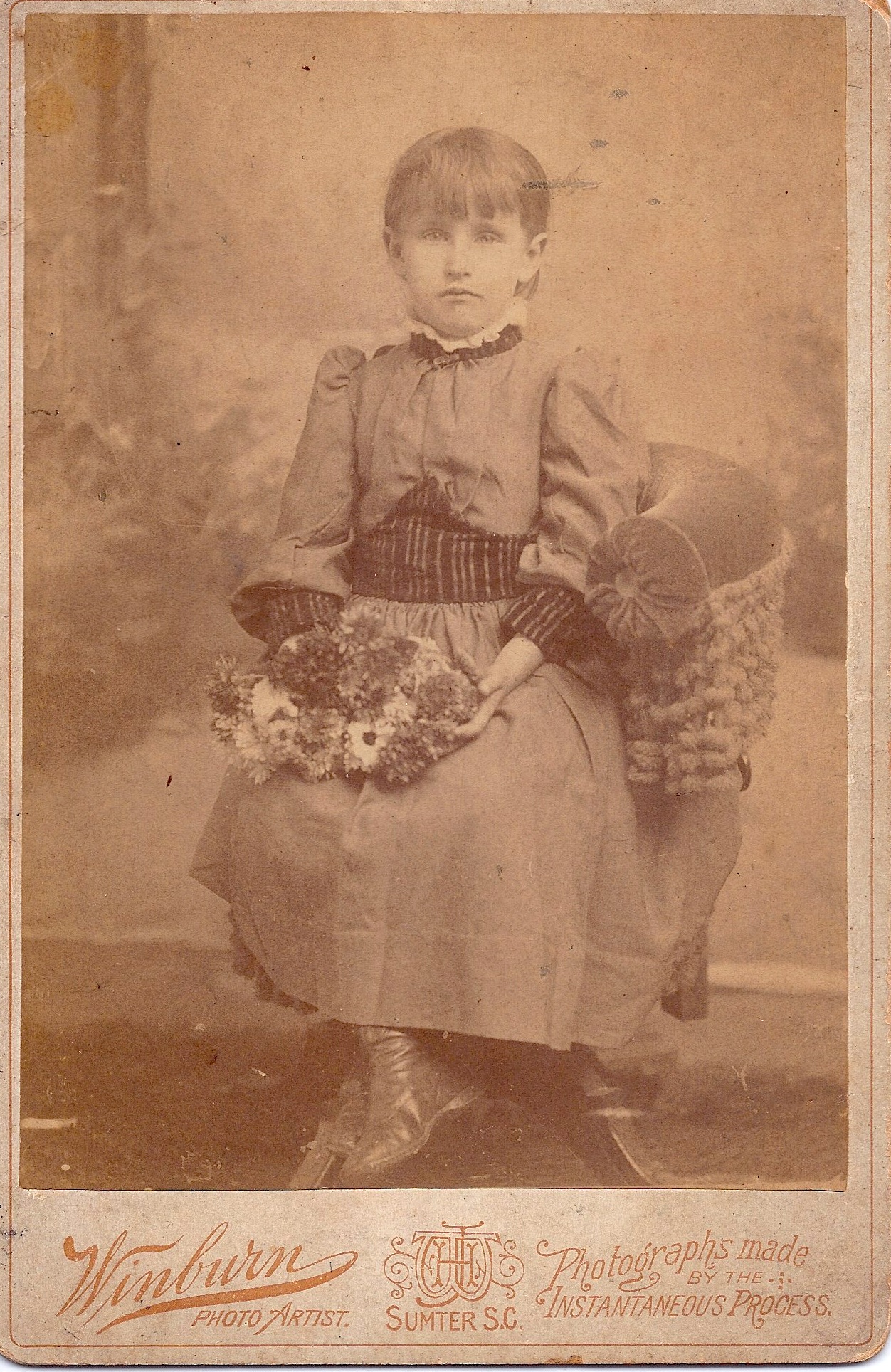
Also shown is a photo of an even younger Georgia Dargan, maybe around 7 or 8 years old?  GeorgiaDargan

John Napolean Frierson, anti-secessionist?

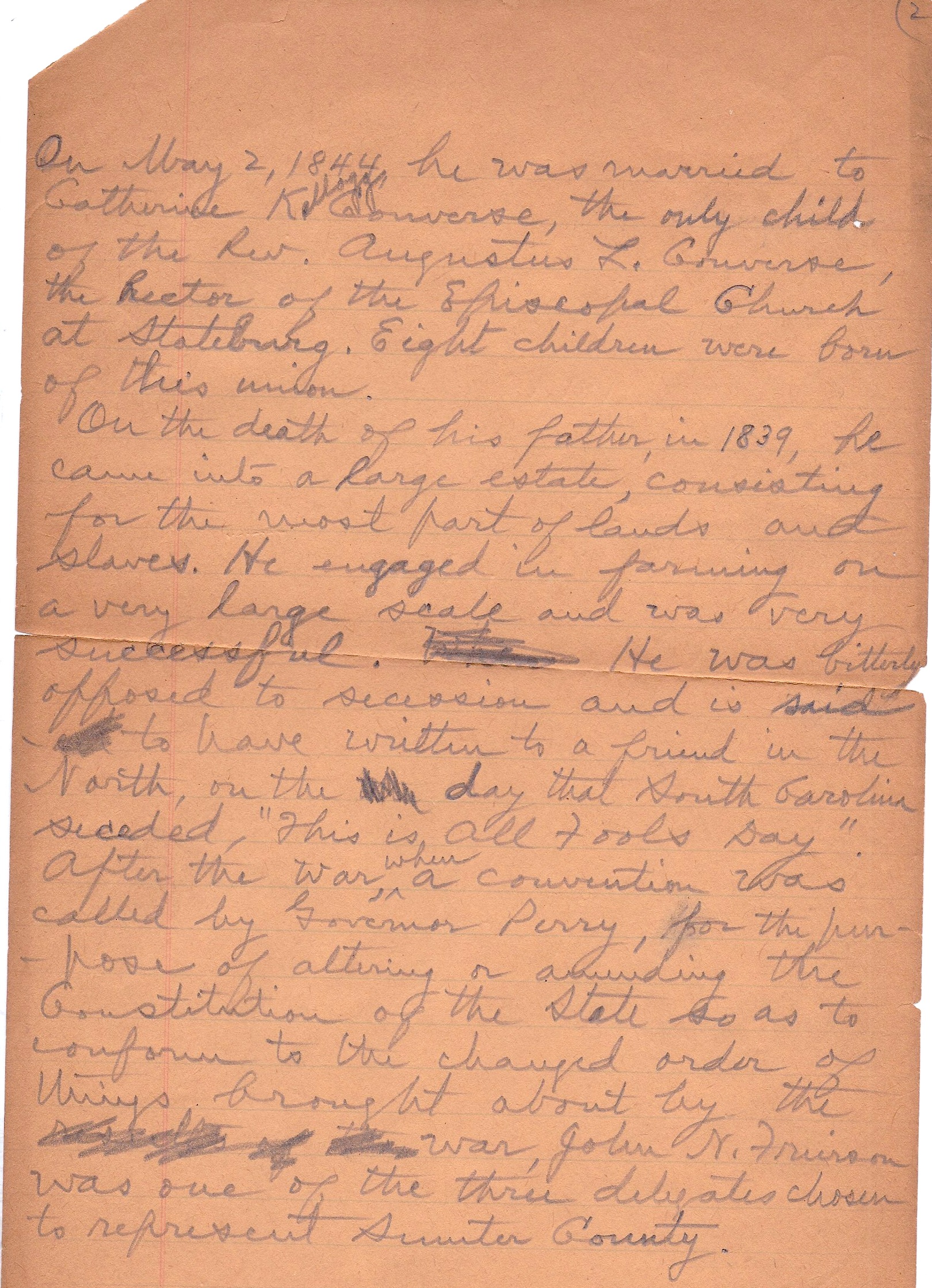
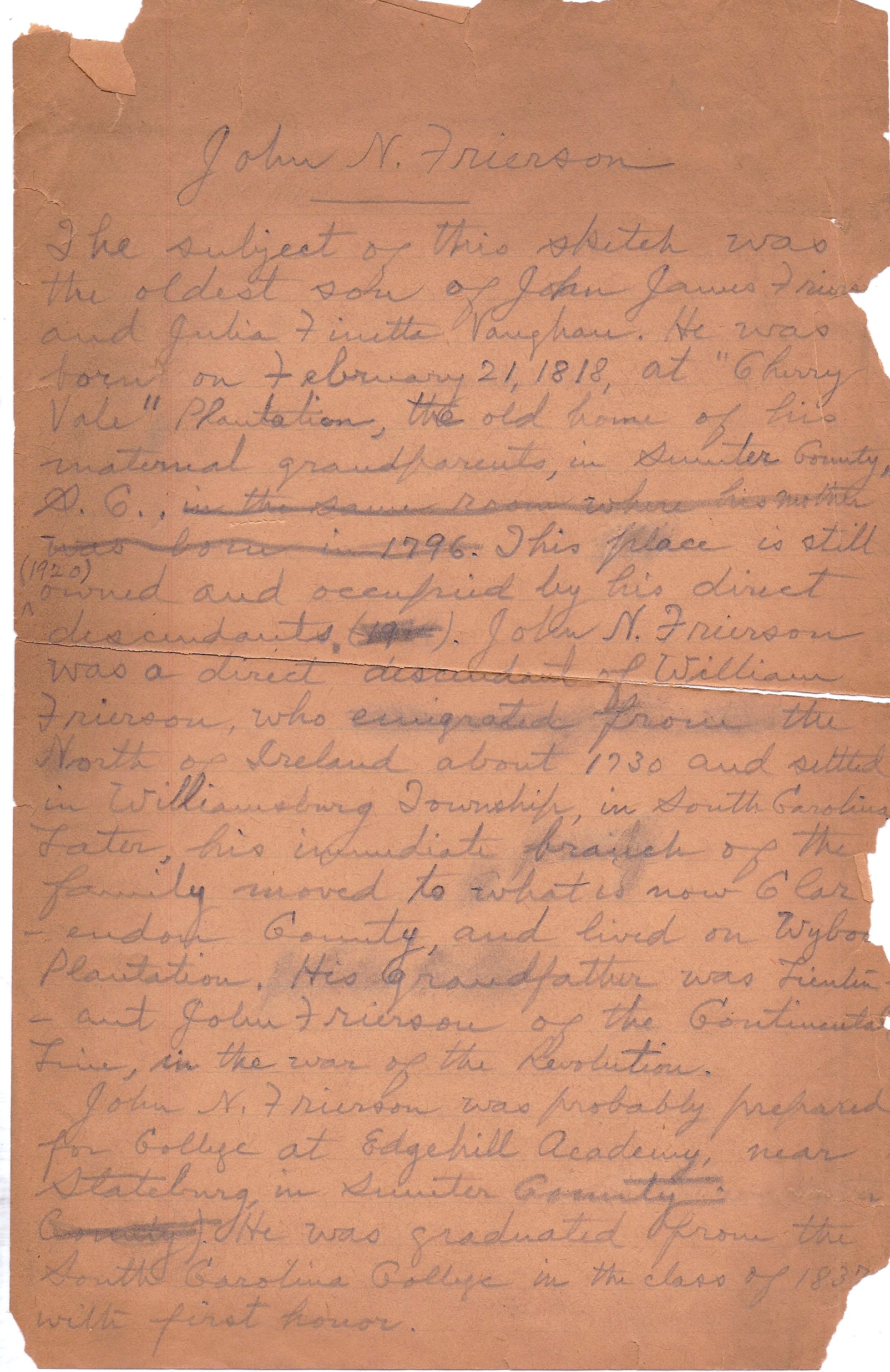
I just found a two-page, handwritten sketch about John Napolean Frierson written by his grandson,  James Nelson Frierson.  John N. Frierson p2 John N. Frierson p1The papers are brittle and yellowed as you can see to the right. The sketch was written in 1920, and though it contains previously known information (some correct and some incorrect!), this is the first time I’ve seen it written that Napolean was not at all in favor of the secession of South Carolina from the Union in 1861. The incorrect statement concerns his so-called “direct ancestor” William Frierson – our branch of the Friersons is not directly descended from the William referred to here by Nelson.  More about this mistake later… I’ll retype the sketch here:

John N. Frierson

The subject of this sketch was the oldest son of John James Frierson and Julia Finetta Vaughan.  He was born on Fegruary 21, 1818, at “Cherry Vale” Plantation, the old home of his maternal grandparents, in Sumter County, S.C.  (Scratched out: “In the same room where his mother was born in 1796”). This place is still (1920) owned and occupied by his direct descendants.  John N. Frierson was a direct descendant of William Frierson who emigrated from the North of Ireland about 1730 and settled in Williamsburg Township, in South Carolina.  Later, his immediate branch of the family moved to what is now Clarendon County, and lived on Wyboo Plantation.  His grandfather was Lieutenant John Frierson of the Continental Line, in the War of the Revolution.

John N. Frierson was probably prepared for College at Edgehill Academy near Stateburg in Sumter County.  He was graduated from the South Carolina College (now the University of South Carolina) in the class of 1837 with first honor.   On May 2, 1844, he was married to Catherine Kellogg Converse, the only child of the Rev. Augustus L. Converse, the Rector of the Episcopal Church at Stateburg.  Eight children were born of this union.

On the death of his father in 1839, he came into a large estate, consisting for the most part of lands and slaves.  He engaged in farming on a very large scale and was very successful.  He was bitterly opposed to secession and is said to have written to a friend in the North, on the day that South Carolina seceded, “This is All Fools Day”.  After the War, when a convention was called by Governor Perry, for the purpose of altering or amending the Constitution of the State so as to conform to the changed order of things, brought about by the war, John N. Frierson was one of the three delegates chosen to represent Sumter County.

“Bama’s” 85th Birthday Party

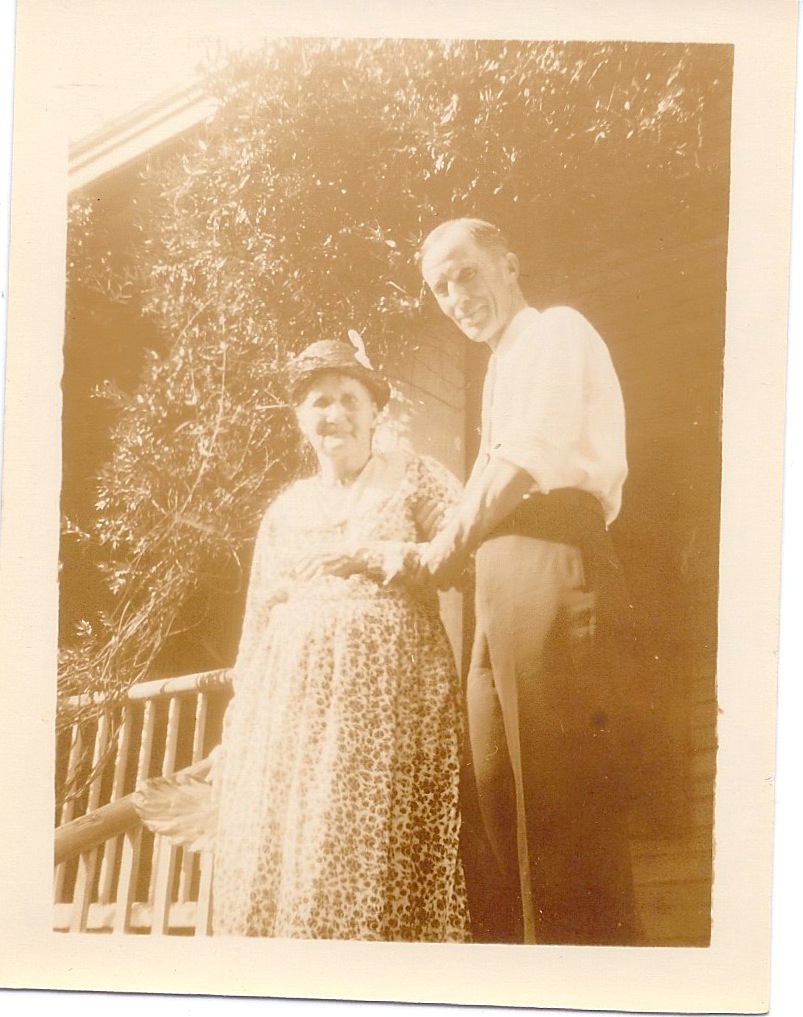
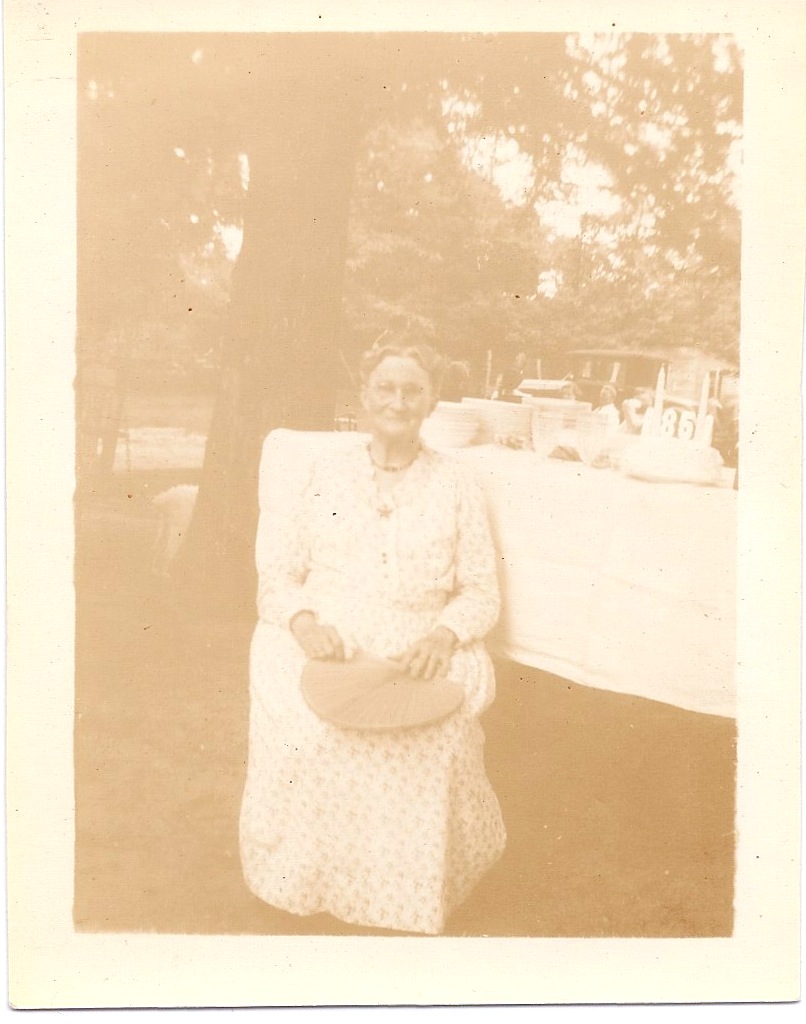
I found these five snapshots in a little Kodak envelope labeled “Mr. Mark Sullivan”  on the outside with a total charge of $3.00 for the developing and printing.  Apparently Mark had taken the photos while attending the 85th birthday party of his grandmother, Mrs. Elizabeth Nelson Frierson, MarkSullivansPix3called “Bama” by my father and all her grandchildren.  After talking with my Dad some years ago, I had written “Bama” on the back of the photo you see to the right in which she walks down the stairs at Cherry Vale with her oldest son James Nelson Frierson.  “Bama”  was born on July 22, 1849, so this party was taking place in July of 1934, a little more than a year before her death on October 4, 1935.

That the scene is her 85th birthday party can be seen by enlarging the photo to the left below and noticing the table has a cake with the number 85 on it! MarkSullivansPix2 There are other people behind the table but it’s hard to distinguish their faces.

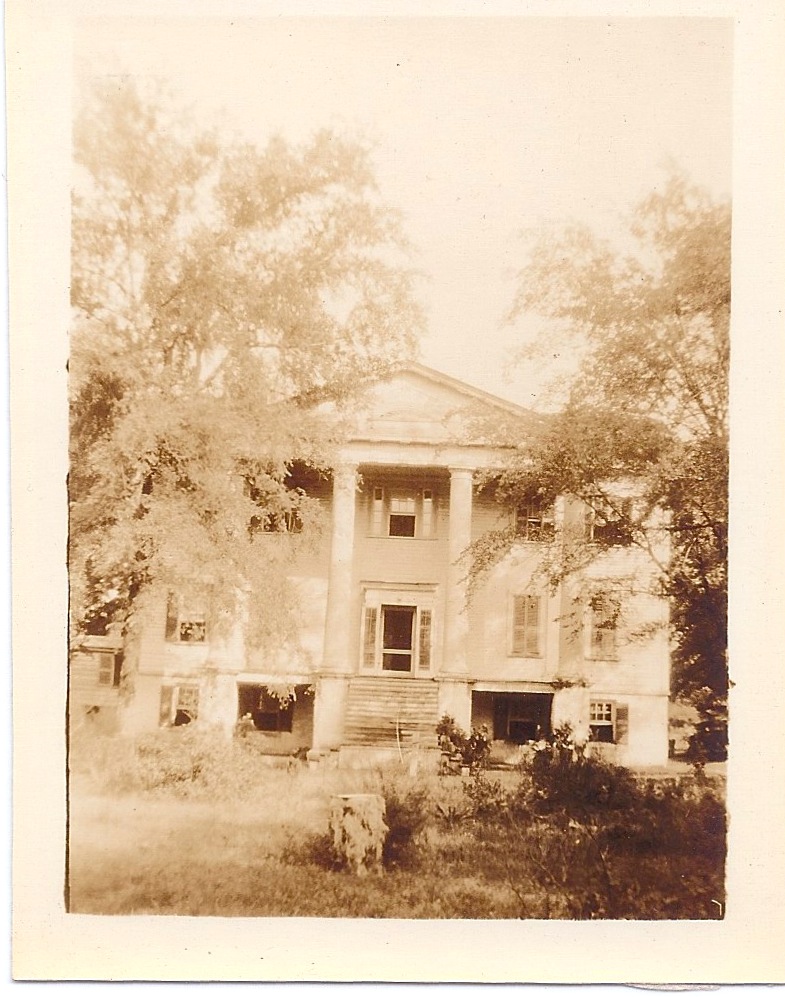
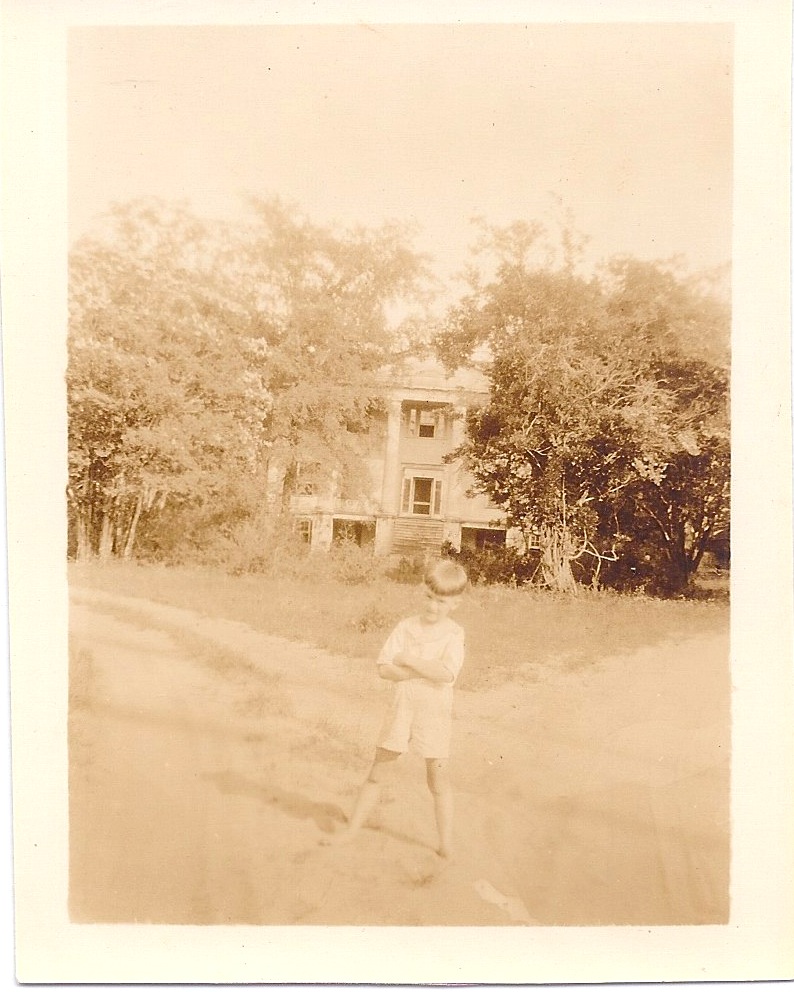
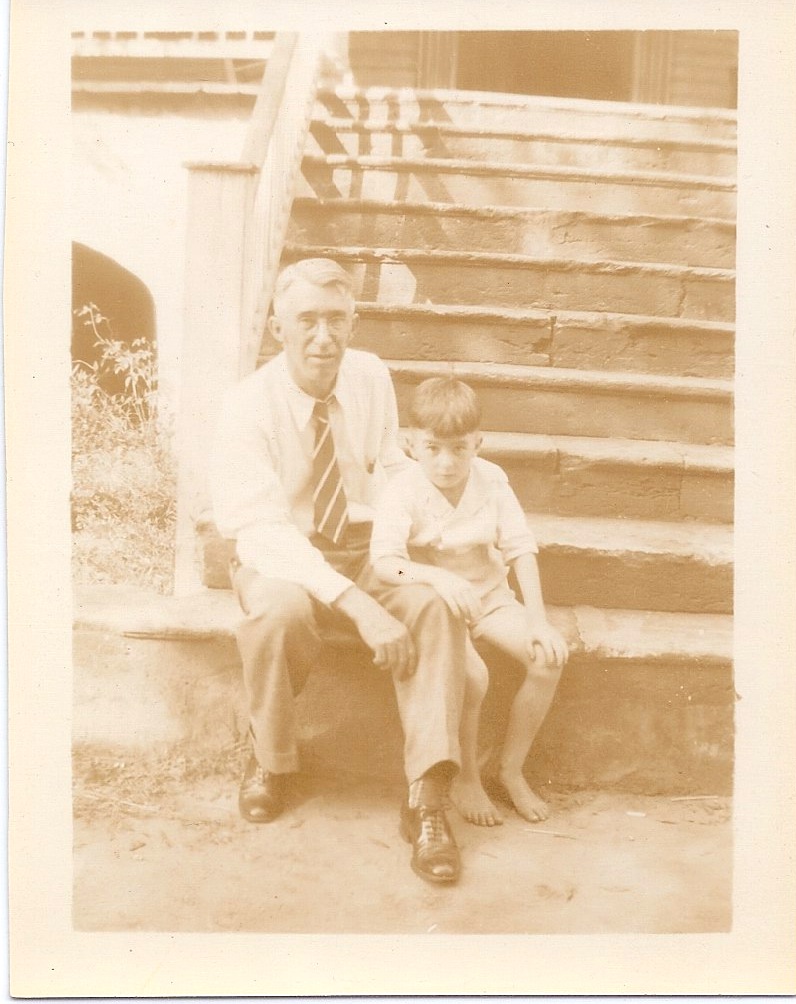
The other three pictures show a front view of Cherry Vale, a view of his grandmother’s old house with a six year old Henry Franklin Frierson standing in the front yard, and the young Henry seated with his father Henry Vaughan Frierson (b. 5 Feb. 1880, d. 5 Jan. 1951) on the steps of Cherry Vale.MarkSullivansPixMarkSullivansPix4MarkSullivansPix5  At the time of these photographs in 1934, Henry Vaughan Frierson is the  oldest living brother of Uncle Nelson.  The second son of “Bama”, William Delancey Frierson, had died in 1918 during the flu epidemic at the age of 41.

The old house seems to be showing its age in these shots taken during the Depression – the steps especially seem to need some repair!

George Dargan Frierson

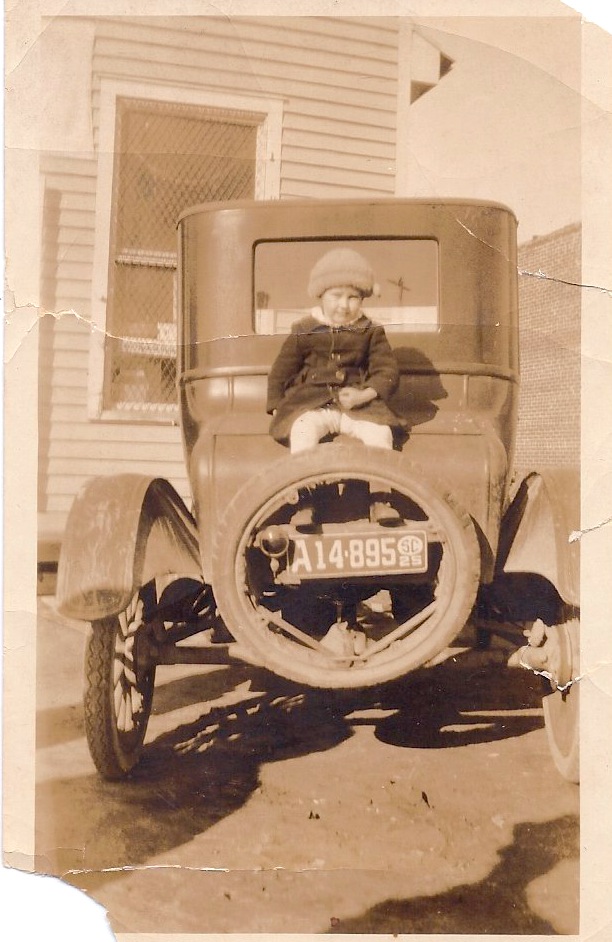
I just came across some old photos of my father George Dargan Frierson taken years ago… He’s 92 years old now and I thought you might like to see these interesting pictures. GDFAge2@CVThe first one on the left is labeled on the back in his mother’s handwriting  “George Dargan Frierson, age 2 years, in the yard at Cherry Vale“.  GDF3The one to the right  is taken about the same time – note the license plate has “SC 25” to the right (South Carolina in 1925).  Is he sitting on a Model T?

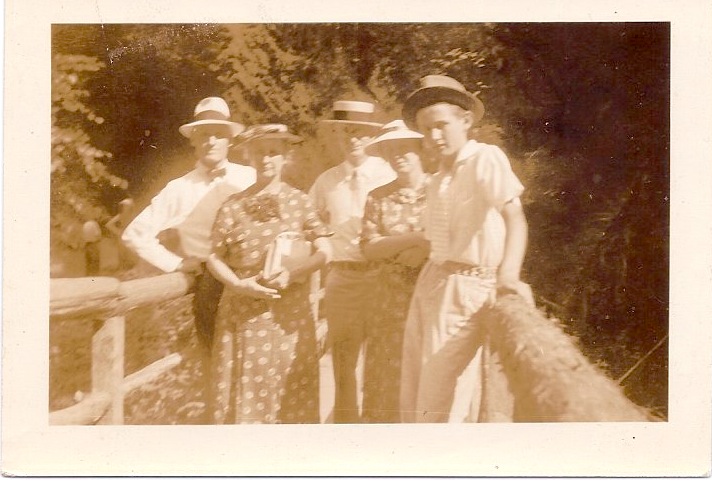
The next photo shows him a growing boy (with hat!), with his parents and another couple – are they in the mountains?  Doesn’t look like Stateburg… His parents are  John Lawrence Frierson (9/4/1883 – 1/30/1963) and Georgia Dargan Frierson (2/4/1886 – 7/1/1974).  I’m not sure who the other couple are?  A sister of Georgia?  A brother or sister of John?  GDF2I just don’t recognize them with the graininess of this photo.  I’m guessing it was taken in the early to mid 1930’s.

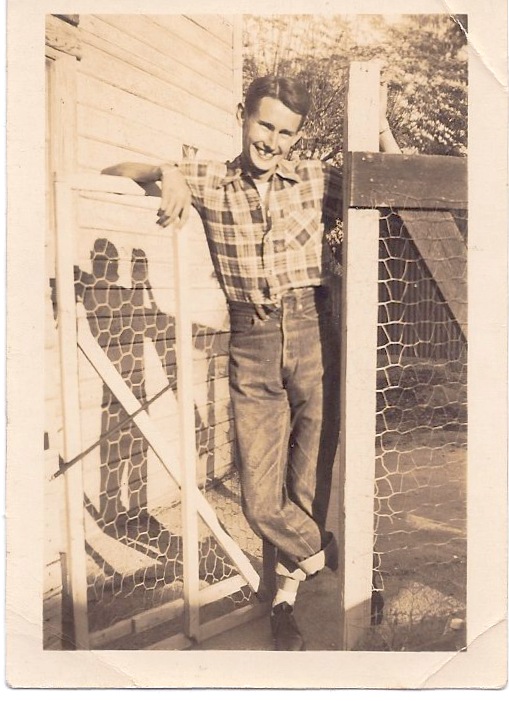
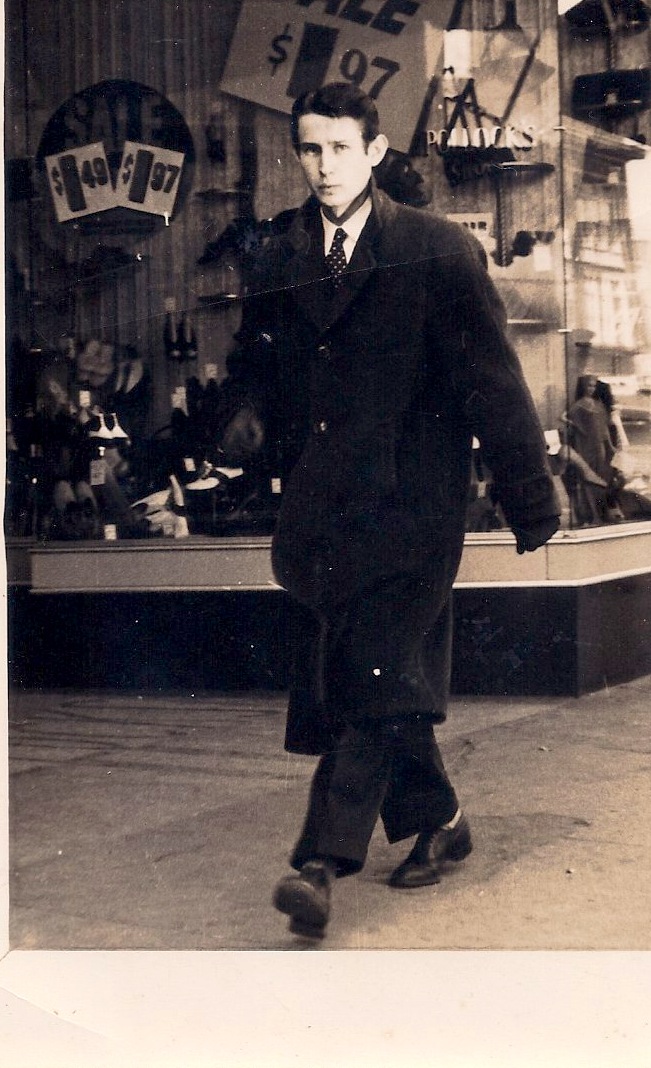
Finally, two photos of my Dad as a young man.  The first in jeans (with pants legs rolled up!) in the country (?) and the second as a dapper young Carolina student on the streets of Columbia.  These are most likely both taken in the late 1930’s  GDF4GDF5

The Final Days of A. L. Converse

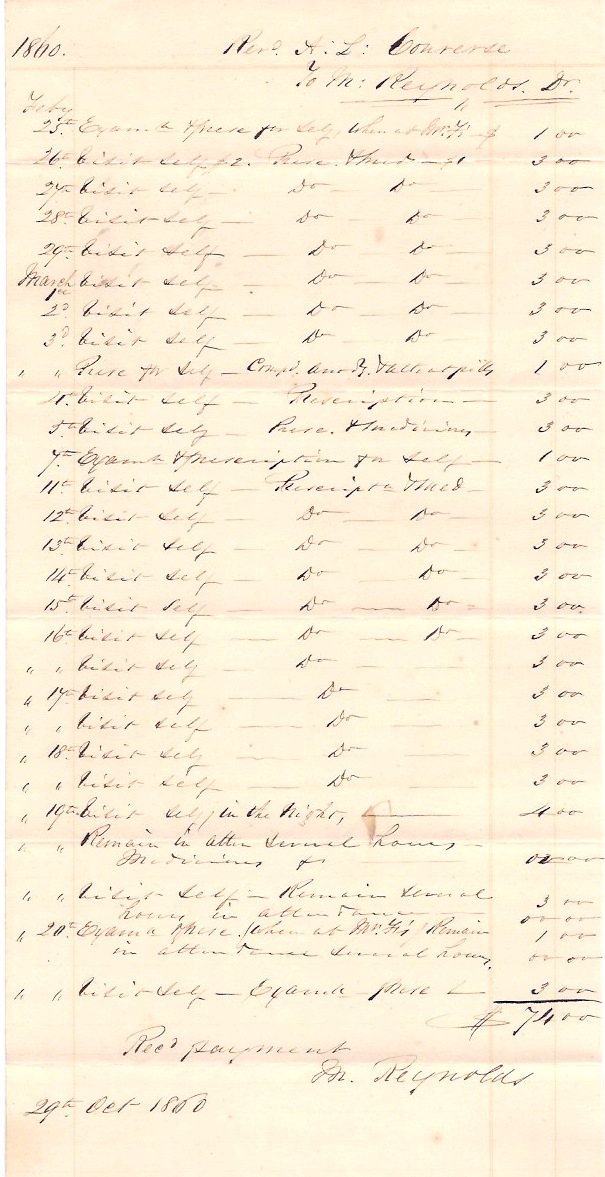
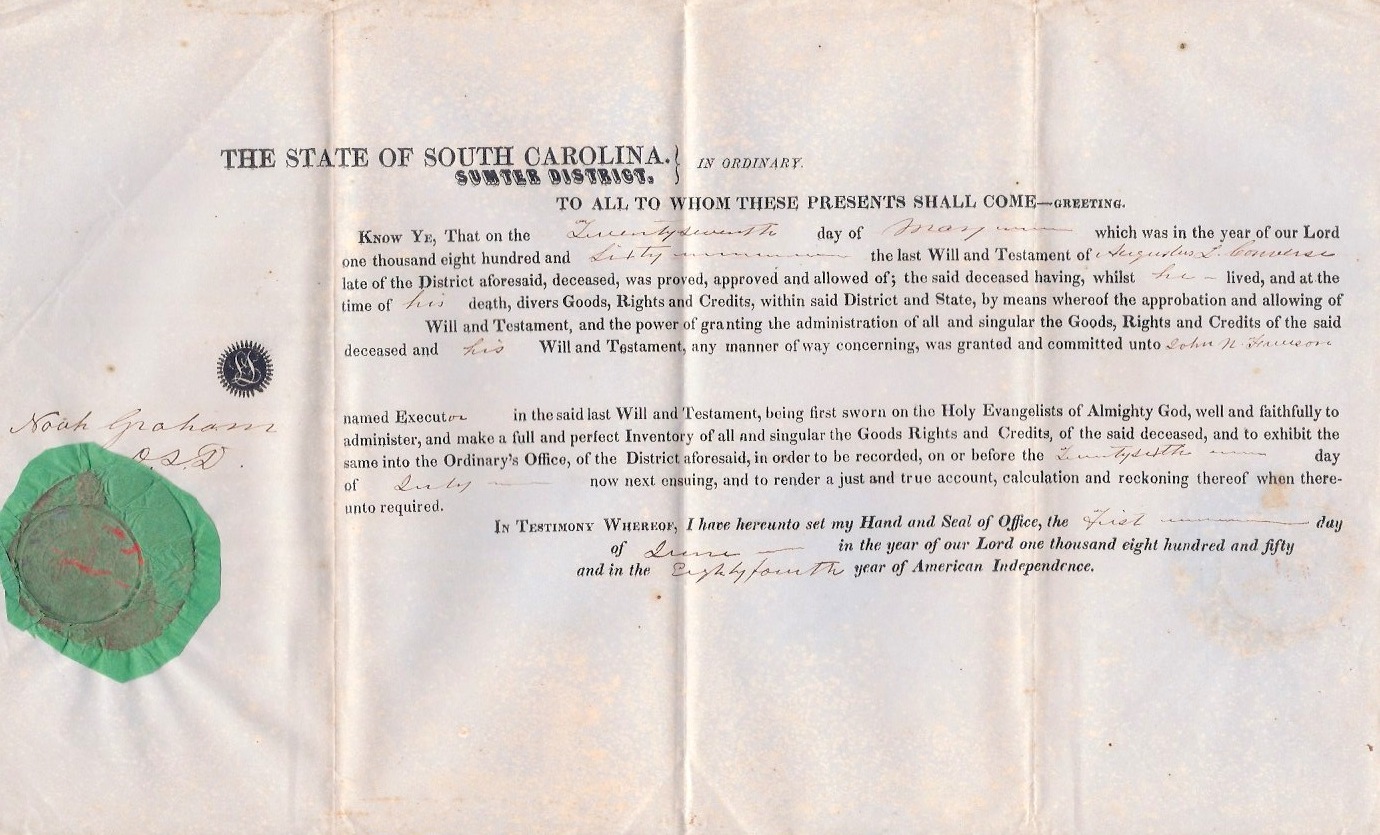
DrReynoldsBillAugustus L. Converse died on March 21, 1860, in Stateburg, most likely at Cherry Vale, the home of his daughter Catherine C. Frierson and son-in-law John Napolean Frierson.  J.N. Frierson was the executor of Rev. Converse’s will (see the document below) JNFExecutorand on October 29, 1860, Dr. M. Reynolds sent the estate a bill for the medical care he gave A.L. Converse in the final month of his life.   As is the case for many medical doctors, the handwriting is difficult to decipher, but we can see that the initial visit by Dr. Reynolds occurred at Cherry Vale (“when at JNF“) as did the final visit on March 20th (“Exam… when at Mr. F’s  Remain in attendance several hours“).  The total cost paid by the estate for the month of home visits and prescription medications was $74.00.  Dr. Mark Reynolds was born in Ireland in 1817, came to S.C. as a young man and in 1848 married a first cousin of John Napolean Frierson,  Julia Vaughan Rees.   John Napolean Frierson’s mother (Julia Finetta Vaughan Frierson)  and  Julia Vaughan Rees Reynolds’ mother (Vermeille Vaughan Rees)  were sisters, and their grandfather, John Anderson,  was the builder of the original (rear) portion of Cherry Vale around 1750.

Augustus Lawrence Converse (1798-1860)

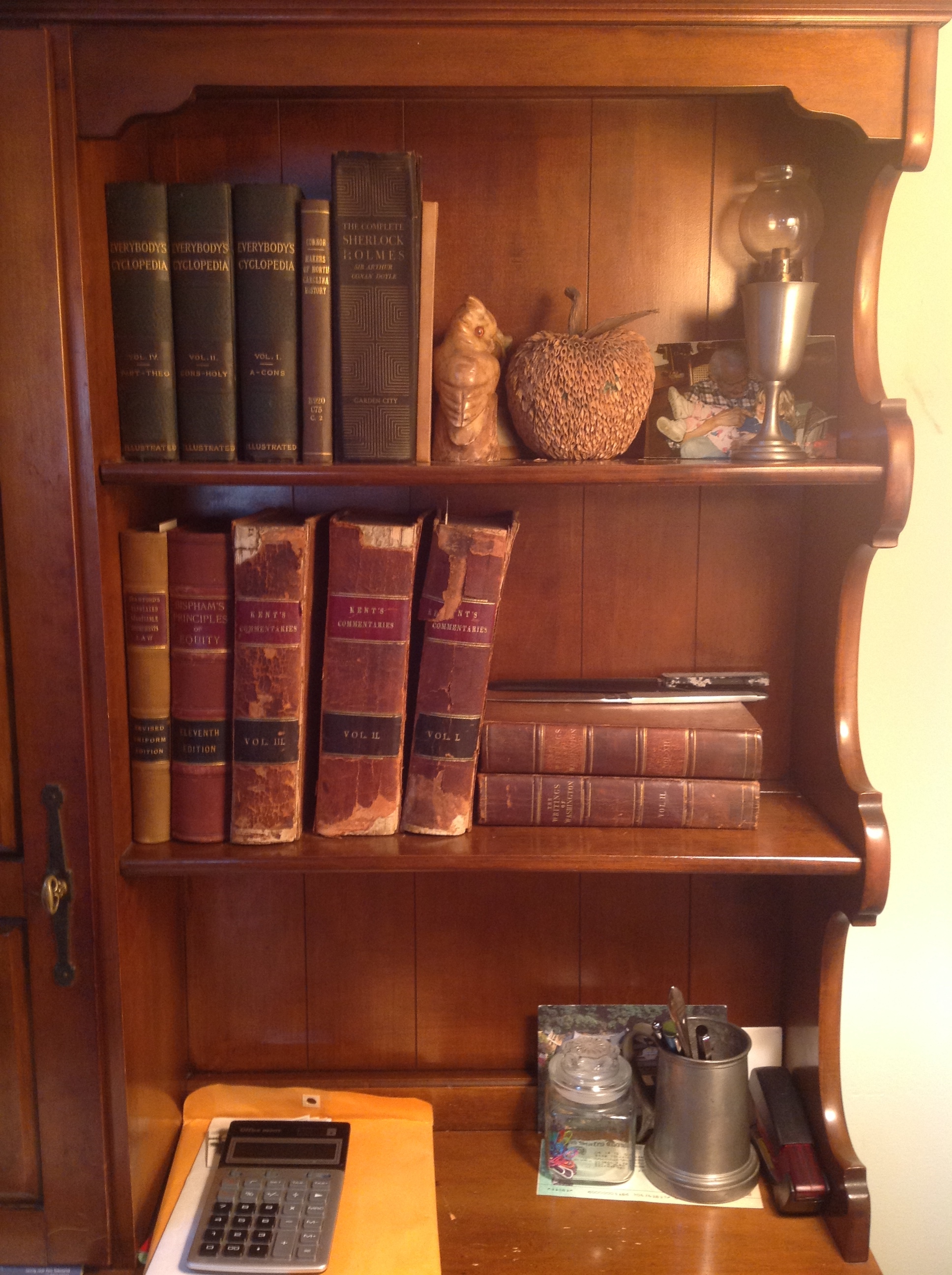
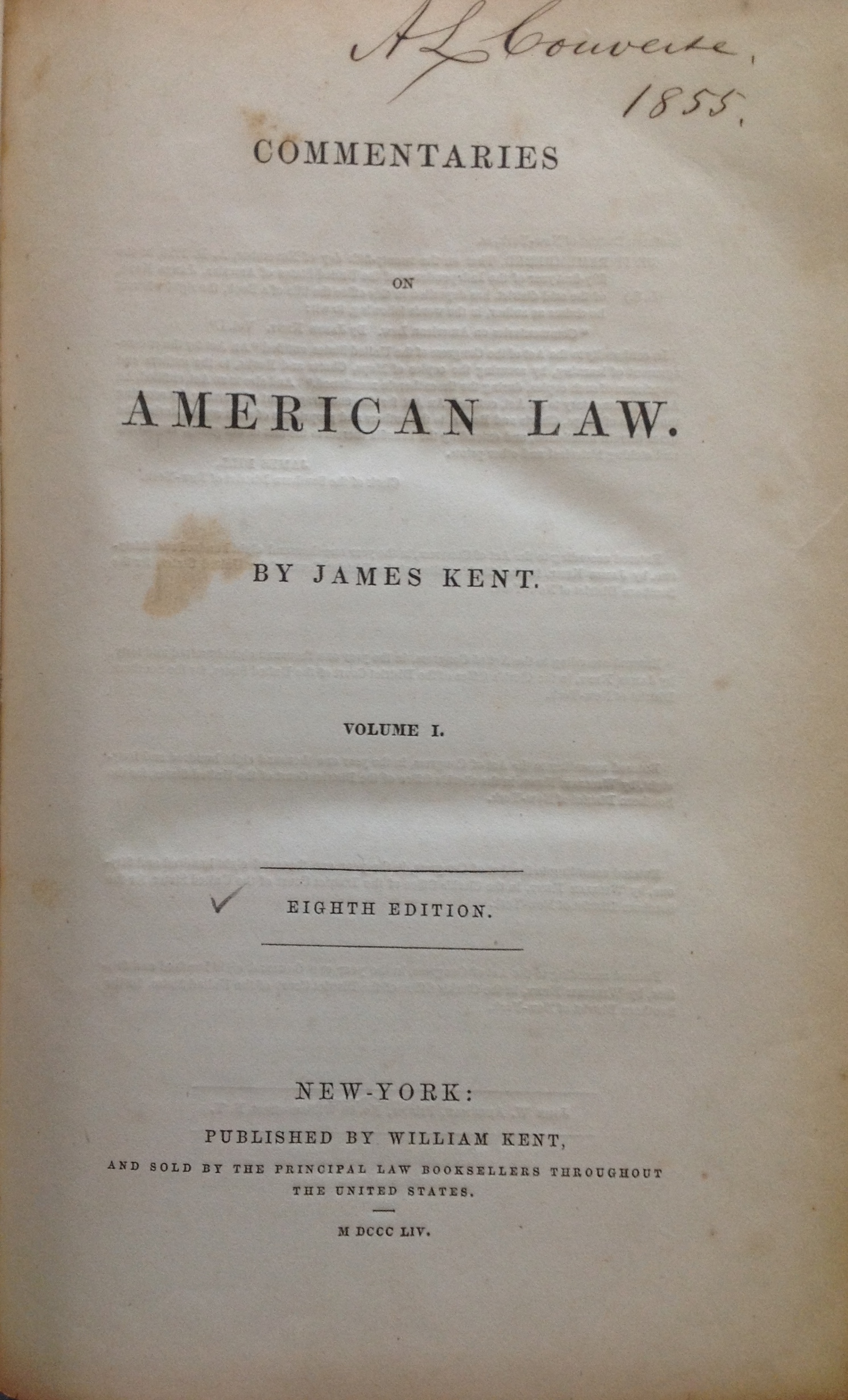
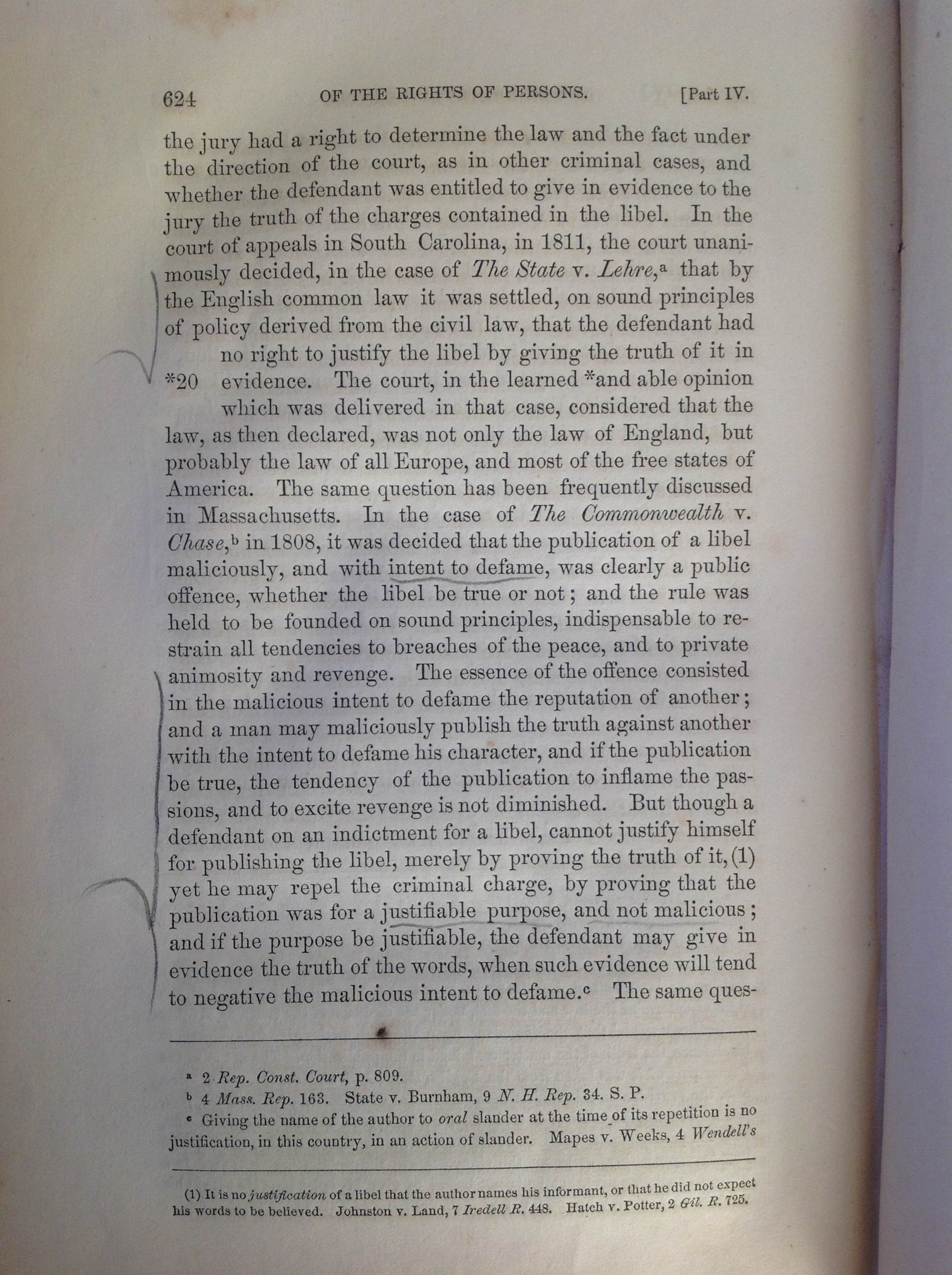
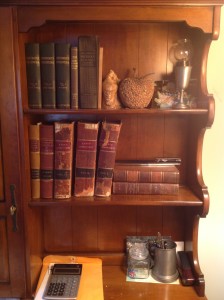
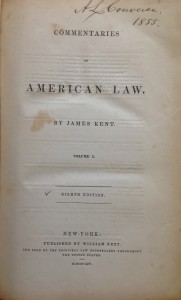
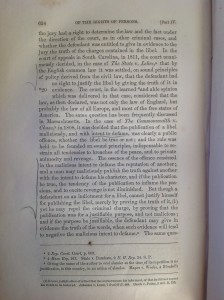
IMG_0241While visiting my Dad last week, I decided to look more carefully at the law books on his desk that I’d passed by hundreds of times before.    Kent’s Commentaries volumes I, II, and III caught my eye first, and when I opened the first volume, I found the original owner was none other than my great-great-great grandfather Augustus Lawrence Converse, the volumes having been signed by him in 1855 “A L Converse”. IMG_0239 Closer inspection shows he apparently read carefully the chapter on libel and slander, underlining and marking paragraphs on several pages. The books were printed in 1854 so I wondered why a preacher would be reading new law books about libel and slander? Well, it turns out that by this time in his life, he had already resigned (or been fired?) as rector of The Church of the Holy Cross, been involved in serious legal proceedings brought against him by his second wife, Marion Singleton Deveaux, and had been defrocked by the Episcopal Church for physical attacks he had made on her! He felt he was being slandered or libeled …? IMG_0244So here’s the story as I’ve been able to discover it and its a fascinating one! The core information in this post comes from two main sources: Anne King Gregorie’s History of Sumter County (1954)) and the excellent blog entitled Kihm’s St. James’ of Skaneateles NY Blog written by Kihm Winship (akhimbo@gmail.com). Court transcripts and letters in the Singleton family papers at various libraries are most likely the primary sources for these writers but I haven’t been able to review those as yet. I also just found this recent book which contains information on the Converse/Singleton saga but I’ve yet to review it … Masterful Women: Slaveholding Widows from the American Revolution Through the Civil War, By Kirsten E. Wood, UNC Press, 2006. I hope you enjoy this story!
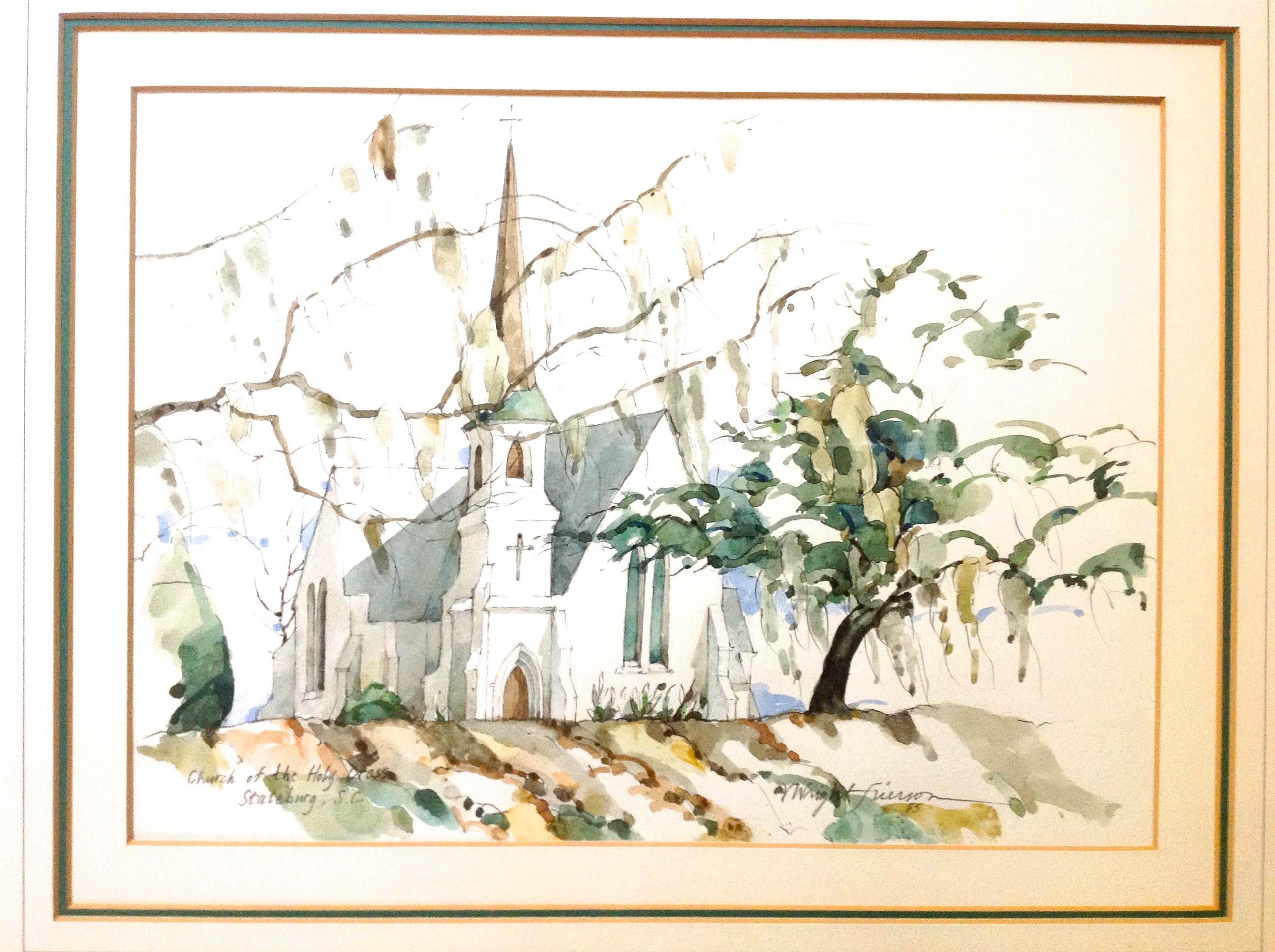
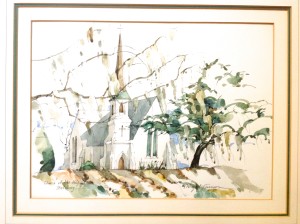
Augustus Lawrence Converse was born on November 21, 1798, in Norwich, Connecticut. The Converse family was an old New England family, the first immigrant being Deacon Edward Converse, who arrived from England to Salem, Massachusetts, in 1630 (more about this family in a later post). In 1825 Augustus married Mary Ann Kellogg of Skaneateles, N.Y., the daughter of one of the most wealthy and influential men in town, Daniel Kellogg. (In a future post I’ll tell more about his life too). A.L. Converse had graduated from Union College in 1819 and was in Skaneateles after his ordination in 1823 serving there in an Episcopal church, St.James. There he met Miss Kellogg and they married. In 1827 the couple moved to Stateburg, S.C., where he had been called as rector of the Clermont Episcopal Church (later to be rebuilt and renamed The Church of the Holy Cross).  Their only daughter, Catherine Kellogg Converse (b. 7/3/1827, d. 10/7/1899), was born soon after the family arrived in Stateburg.   Seventeen years later young Catherine would marry John Napolean Frierson and move down the road to Cherry Vale.   A painting of the Holy Cross Church done by Virginia Wright-Frierson in 1975 is shown here. IMG_0249
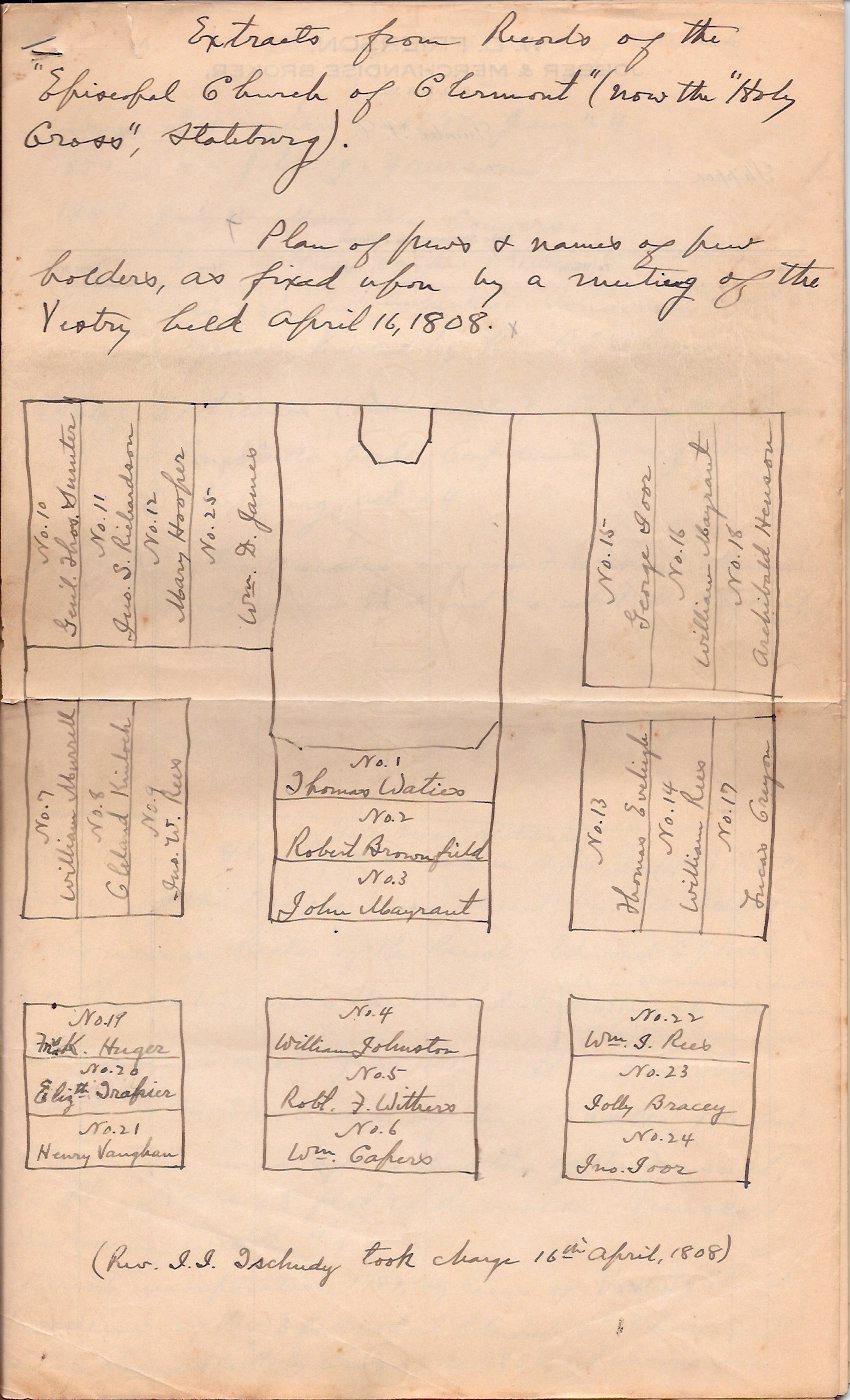
Holy Cross Church and its predecessor have played an important role in the Frierson family story over the years and J. Nelson Frierson wrote a history of the church I think in connection with an article he published in 1909 in The State newspaper on the town of Stateburg.  He extracted many family references from the records of the old and new churches and the first page of his work is shown here (it’s a 20 page document!).ExtractsHolyCross
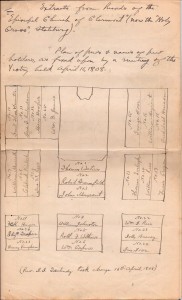
In these records, it is seen that Rev. Converse seemed to be performing his duties in a creditable way- baptisms, funerals, and weddings – the most impressive wedding must have been in 1838 when at the Singleton plantation “Home House” he performed the marriage of young Angelica Singleton (sister of his future second wife Marion) to Abraham van Buren, eldest son of the sitting President of the United States, Martin van Buren.  The Extracts do seem to show an inordinate number of entries relating to the Rev. Converse’s salary and compensation! – he seems to have been on an annual contract!

The Converse-Frierson wedding on May 2, 1844, between Catherine Converse and John Napolean Frierson was performed by the Rev. C. E. Gadsden.  According to the Extracts, on November 21, 1847, Rev. Converse performed a “private” baptism of his wife Mary Ann Kellogg Converse “in her last illness, with Mrs. Julia Frierson [mother of John Napolean Frierson] and Mr. and Mrs. Jno N. Frierson [John Napolean and Catherine], witnesses.”  She died on January 8, 1848, and her husband performed her funeral service and burial on January 11, 1848.  In fact he performed a double funeral on that day:  Under  “Burials”, Uncle Nelson wrote in the Extracts…  “1848 Jan. 11 – Mary Ann Converse and Henry Vaughan Frierson in the same coffin” .  Henry Vaughan Frierson, their third grandchild,  was born in 1847 and lived less than one year.

In almost exactly one year to the day, Rev. Converse remarried (from the Extracts: “ 1849, Jan.15, by the Rev. Peter J. Shand“), again to a wealthy woman, this time the widow Marion Singleton Deveaux, and it is here that the real story begins….Marion Singleton was the daughter of the wealthy planter Colonel Richard Singleton of Stateburg and when her first husband Robert Marion Deveaux died in 1843, it was said that the Rev. and Mrs. Converse comforted the widow and her family during this sad time. Marion S. Deveaux not only inherited the plantation called “The Ruins” from her husband, but had large land holdings given her in trust by her father. Upon her marriage to Rev. Converse, he initially signed a “prenuptial” agreement that her lands would pass to her children should she die first, but later that agreement was changed at his insistence apparently. I’m going to quote now from “Kihm’s St. James’ Blog” (link given here:  http://kihm3.wordpress.com/2011/12/11/when-rectors-attack/ ) since it tells the story so completely…

“The following year (1849) the Rev. Converse married a widow from his parish, Marion Singleton DeVeaux. She was 18 years his junior, and her family warned her that this was not a good match. But the Rev. Converse and his wife Mary Ann had been a great comfort to Mrs. DeVeaux during her husband’s final illness in 1843, and she went ahead with the marriage. The Rev. Converse and his new bride would live at her plantation, The Ruins, on a hill near the church where Converse presided. The Ruins, named for its condition when the Singleton family first took possession, had been restored and was now said to be as lovely as a French chateau.

From her father, a cotton planter, Marion had inherited land holdings which by law remained hers when she married, and were to be passed down to her children. Her first husband had agreed to this arrangement. Initially, the Rev. Converse also acquiesced. A prenuptial agreement, signed by both parties, put Marion’s property into the hands of trustees to be held for her; the land would return to her upon the death of Augustus Converse, or to her children should she die before him. But soon after the marriage, at her husband’s insistence, Mrs. Converse signed a deed giving her husband a share of the property, which he would have for life if he survived her.

In 1850, the Rev. Converse laid the cornerstone for a new church to be known as the Church of the Holy Cross. The church was consecrated in 1852. But as Mary Elizabeth Beauchamp noted in her Recollections of the Parish of St. James, Skaneateles, the Rev. Converse had “practically changed the duties of his sacred calling for the care of his plantation.” In April 1853, a church committee reported: “Resolved, that Mr. Converse’s resignation be accepted.”

At this point, the Rev. Converse’s transformation accelerated. Freed from his church duties and having obtained the upper hand at home, he became more and more tyrannical. To escape, Marion went on long visits to relatives in New York, Philadelphia and Virginia as well as South Carolina. The general feeling among Marion’s family was that Converse was a sanctimonious, short-tempered scoundrel. One aunt summed it up neatly, referring to Converse as “that grasping bad evil Man.” But Marion eventually had to return to her home and Converse was in it.

In January of 1854, infuriated because Marion would not submit to his wishes, he forced her into his room, locked the door behind them, and began loading his gun. Marion ran out onto a terrace and jumped ten feet to the ground below, where slaves, who had been drawn by screams and shouting, hurried her to their quarters.

Soon after, Converse punished the slaves for sheltering his wife and then gave his wife a “prolonged beating.” The accounts do not say if he used his fists or his cane, but the result was that Marion, bruised and bleeding, again fled from her home, this time with the help of one of her daughters, and took refuge in a cotton-house. The Rev. Converse, pursuing the two women there, called for a hammer and nails to seal them inside. Hearing this, the mother and daughter ran out into the cotton fields and hid. The weather was cold; it was pouring rain, and apparently the Rev. Converse, with his wooden leg, was unable or unwilling to give pursuit.

Again, it would seem, one or more of the slaves interceded. A neighbor was summoned, found the women in the field, and led them to safety across a river to another plantation.

At a safe distance from his rage, Marion began legal action to separate from her husband, to resume her first husband’s name and regain her land. In court, the Rev. Converse testified that he could not reconcile himself to a situation in which “all his rights as a husband were subordinate to her claim.” He said she undermined his authority with the slaves. He accused her family of “unwarrantable interference in his domestic concerns.”

The court – supporting the rights of a man, husband and slave holder – ruled against Marion; the Rev. Converse retained control of The Ruins and his wife’s property.

Marion appealed to a higher court and lost again, but this time at least the court did order the Rev. Converse to give his wife half the income from her land. And the judge, in an aside, referred to Converse’s behavior as “revolting.”

In 1855, a much higher court gave its opinion: The Episcopal Church defrocked Converse for the “Unprovoked and Cruel beating” of his wife.

Finally, in 1857, a legal settlement was reached. Augustus Converse took $24,250 – a huge sum raised by Marion’s family and friends – in return for vacating her home and renouncing all claims to her estate. Marion and her youngest daughter returned to The Ruins to live; Marion dropped the name of Converse, and lived the rest of her life as though A.L. Converse had never existed. Her oldest daughter and her son-in-law lived at The Ruins for part of the year to help her manage the estate. In Marion’s will, she specified that her property was to go to her daughters for their “sole and separate use” during their lifetimes. She would not allow her daughters to suffer as she had.

In 1860, after three years of counting his money and living as a social pariah, Augustus L. Converse died. He was buried in the churchyard of the Church of the Holy Cross.”
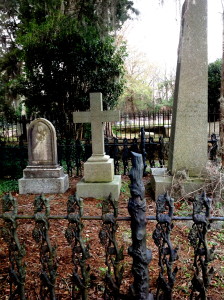
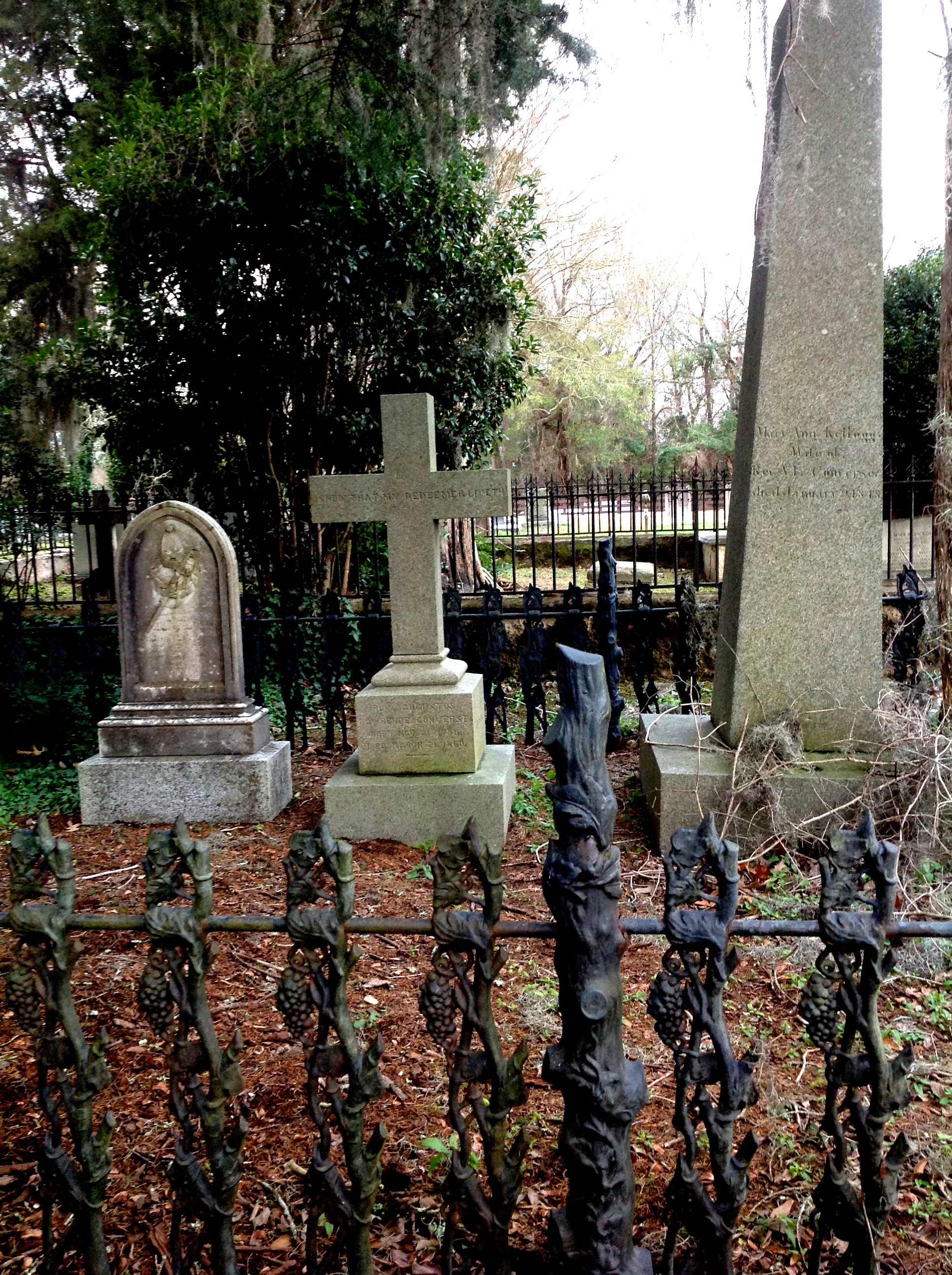
ConverseHolyCrossAccording to the Extracts of Records by J. Nelson Frierson, the Reverend P. J. Shand performed A. L. Converse’s funeral on March 23, 1860.  His tombstone (the cross in the center of the three) is shown here in the Frierson-Vaughan enclosure at Holy Cross Church, alongside the one for first wife, Mary Ann.  Hers is the tall obelisk at the right.